
Yes. Veritech can customise the label size, revealed message, colour, artwork, material, adhesive and security features after reviewing the application.

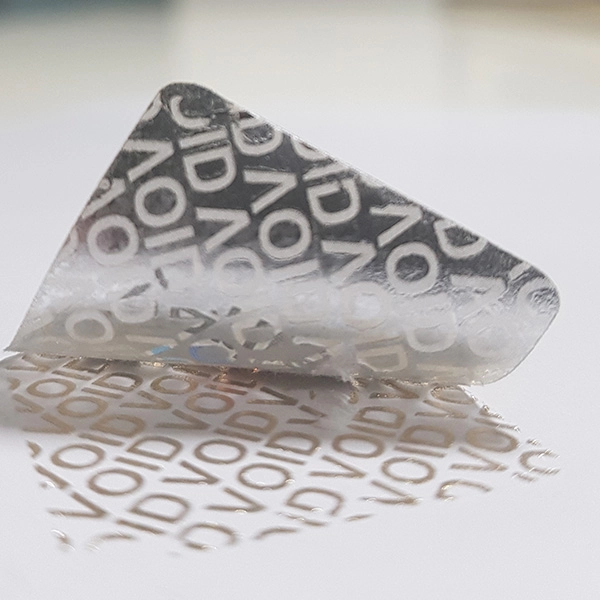
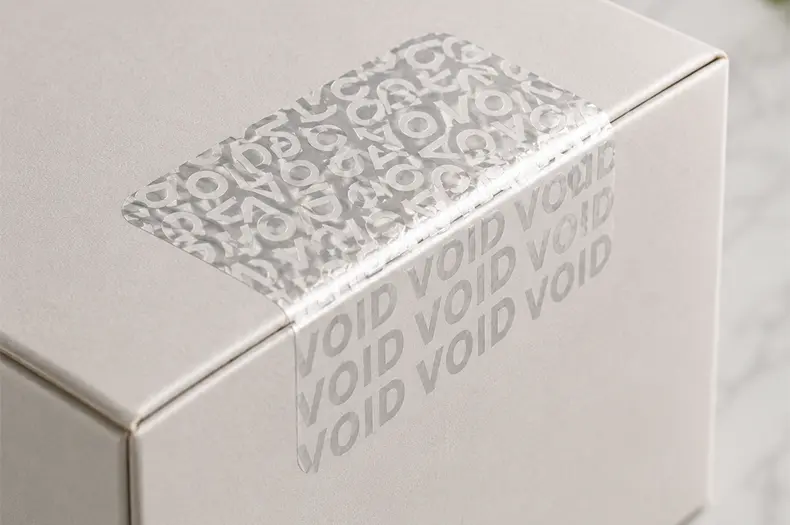
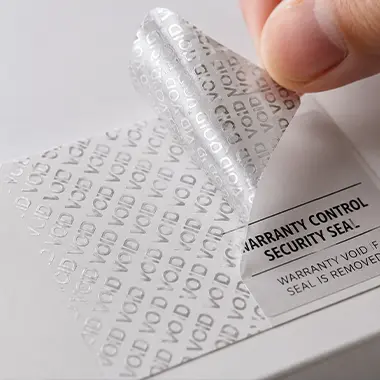
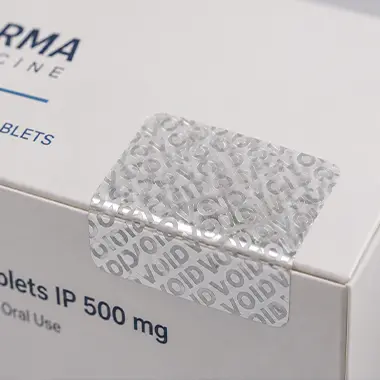
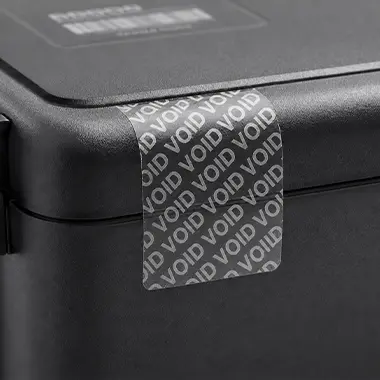
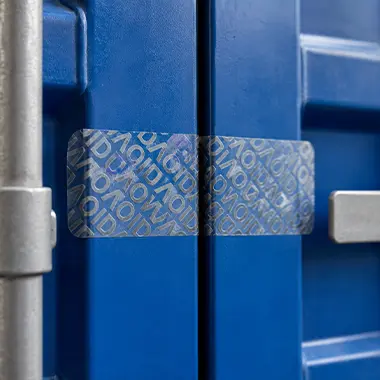
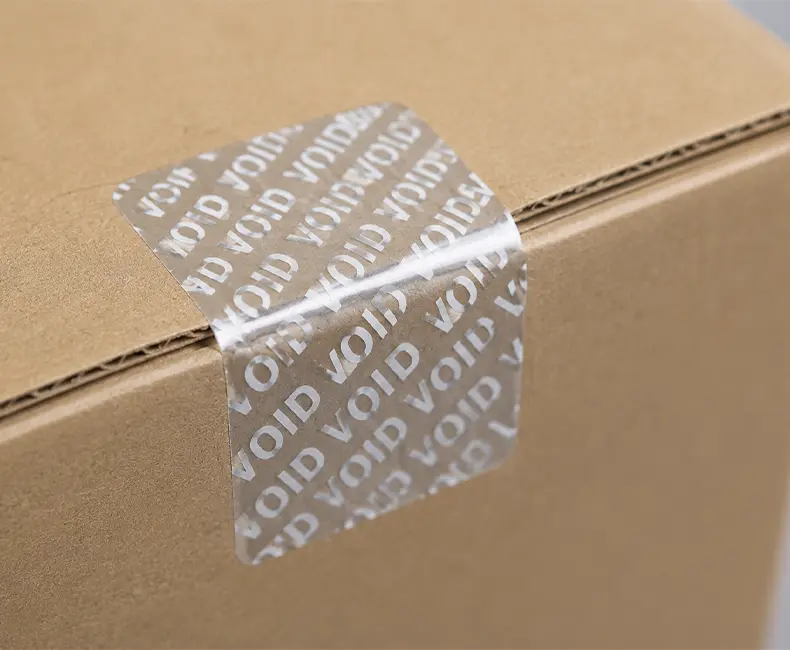
Void tamper labels are designed to show clear evidence when someone tries to remove them. Depending on the construction, the label can leave a VOID, OPENED or custom message on the surface, in the label film or in both places.
The right anti tamper labels depend on more than artwork. The surface, adhesive, application method, storage conditions and expected type of misuse all affect how the label should be built.
Veritech develops these security stickers for packs, products and assets that need a visible and difficult-to-reverse sign of interference.
What are anti tamper labels?
Anti tamper labels are pressure-sensitive security labels that change permanently when removal is attempted. This response helps an inspector see that a seal has been lifted, replaced or disturbed.
A full-transfer construction leaves most of the message or adhesive pattern on the surface. A partial-transfer construction splits the message between the surface and the label. Non-transfer options can reveal evidence within the label itself when residue is not suitable for the application.
The label can also carry printed branding, numbering, barcodes, QR codes or holographic security features when the application requires an additional layer of identification.
Products may pass through several warehouses, transport partners, dealers or service points before reaching the end user. A tamper evident seal gives each person in that chain a simple visual check before they accept or open the item.
The label can also discourage label reuse, unauthorised access and part substitution. It does not make a pack impossible to open, but it makes attempted removal much harder to hide.
3D security features that boost brand authenticity and protection. Hard to replicate, they elevate packaging and safeguard your products.
Veritech’s custom products and solutions make it easy to verify authenticity, protecting goods from counterfeiting and diversion.
Veritech’s advanced printing technology ensure intricate and secure designs that only specialized manufacturers can provide.
Veritech’s anti-counterfeiting and anti-tampering solutions protect product authenticity, secure brand image, and safeguard documents against forgery.
Veritech continually expands its range of security features, designing them as overt, covert, or forensic. Trust us to deliver the cutting-edge protection your brand requires.
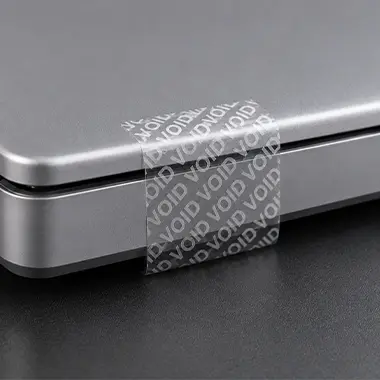
Void labels are suitable for applications where a product, closure, access panel or warranty point should show evidence of opening or removal.
The final construction should be tested on the actual surface. Adhesion can change with texture, coating, contamination, temperature and the time allowed for the adhesive to build strength.
Share the material, coating, texture and any cleaning process used before application.
The message may remain on the surface, stay in the label or split between both.
Temperature, moisture, chemicals, abrasion and outdoor exposure may affect the material and adhesive.
Manual and automatic application have different requirements for roll direction, liner and label dimensions.
Apply the label to real products and review it after storage, handling and removal attempts.
Veritech can develop the label construction, visible security features and variable data as one specification. This helps avoid a common problem where the artwork looks correct but the adhesive or release pattern does not suit the surface.
Brands can choose from different transfer behaviours, films, adhesives, printed effects and holographic options. The recommendation is based on the product, the expected threat and the way the label will be inspected.
For projects that may later require digital authentication, the label can be planned with space and print capability for unique codes from the start.
Share a representative product or surface sample whenever possible. Material names alone may not reveal the effect of coatings, mould-release agents, texture or surface contamination.
Explain what the label must protect and how someone may try to remove it. This helps determine whether a full-transfer, partial-transfer, destructive or non-transfer construction is more appropriate.
Confirm the intended label position and available application area. Curves, seams and narrow edges can affect both adhesion and readability.
Variable data and holographic features should be planned before artwork approval because they can affect label size, print method and inspection steps.
After samples are produced, test them under actual storage and handling conditions before approving the production specification.
Yes. Veritech can customise the label size, revealed message, colour, artwork, material, adhesive and security features after reviewing the application.
A void label provides visible evidence when removal is attempted. The term tamper proof seal is often used in the market, but no label can prevent every form of tampering. The aim is to reveal interference clearly.
Yes, subject to the label size, material and print process. Variable data can support tracking, warranty control or digital verification.
No. Adhesion and transfer behaviour vary across plastic, metal, glass, paperboard and coated surfaces. Sampling on the actual product is recommended.
Share the surface, label size, application method, environment, expected threat, production volume and the type of tamper response required.