What Is VeriOVD? Nano-Optics Security for Advanced Brand Protection
Published on 09 Aug 2025
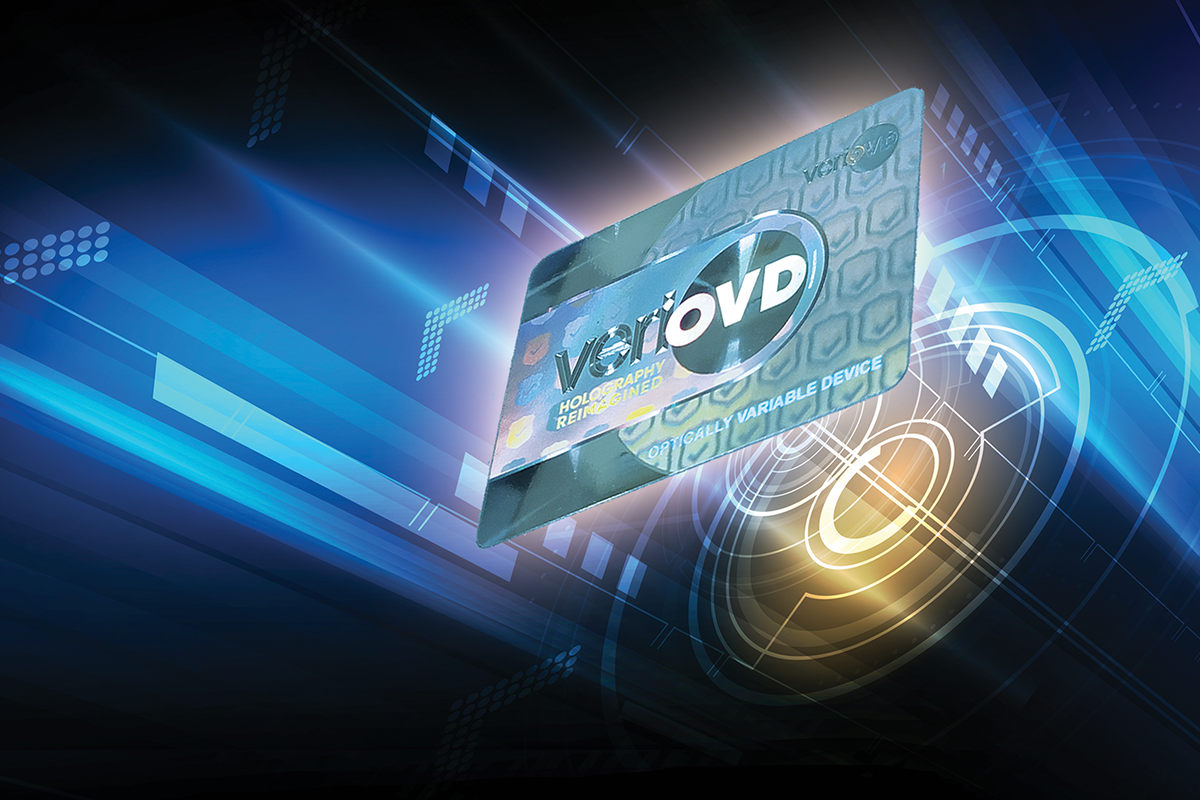
VeriOVD is Veritech's advanced optically variable device developed using nano-optics technology. It combines distinctive visual effects with overt, covert and forensic security features to help brands protect products, packaging and documents from imitation, tampering and unauthorised reproduction.
Unlike a decorative holographic film, VeriOVD is designed as a controlled authentication feature. Its appearance changes as the viewing angle or lighting conditions change, giving consumers, retailers and channel partners a quick visual reference. Microscopic and instrument-readable elements provide additional checks for authorised teams and investigators.
VeriOVD is Veritech’s advanced optically variable device developed using nano-optics technology. It combines distinctive visual effects with overt, covert and forensic security features to help brands protect products, packaging and documents from imitation, tampering and unauthorised reproduction.
Unlike a decorative holographic film, VeriOVD is designed as a controlled authentication feature. Its appearance changes as the viewing angle or lighting conditions change, giving consumers, retailers and channel partners a quick visual reference. Microscopic and instrument-readable elements provide additional checks for authorised teams and investigators.
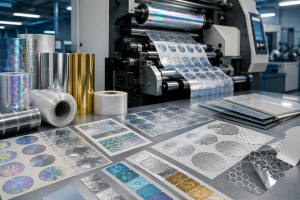
The technology can be converted into security labels, tamper-evident seals, hot-stamping or cold-transfer foils, holographic strips, MRP labels and protected documents. The final design can be adapted to the brand identity, packaging surface, application process, operating environment and level of security required.
What is an optically variable device?
An optically variable device, usually shortened to OVD, is a security feature whose appearance changes when the angle of observation or illumination changes. Depending on its optical structure, an OVD may show colour movement, image switching, apparent motion, depth, lens-like behaviour, metallic or achromatic reflections, hidden images and microscopic patterns.
These effects are produced by precisely engineered microstructures rather than ordinary printed colour. Standard scanning, photocopying or commercial printing may copy the visible artwork, but it cannot accurately recreate the optical behaviour of a secure master.
OVDs are used on product labels, identity documents, certificates, tax documents, payment cards, tickets and other items that require visual authentication. For higher-risk applications, they can be combined with security printing, serialization, tamper evidence and digital verification to create a layered anti-counterfeiting solution.
What is VeriOVD?
VeriOVD is Veritech’s nano-optical OVD platform. It uses engineered optical structures to control how light is reflected, diffracted and perceived from different positions. This enables detailed imagery, apparent movement, deep three-dimensional effects and microscopic security elements within a compact area.
According to Veritech, the platform uses an advanced OVD origination system supplied by 4PICO in the Netherlands. The origination process supports optical features that are difficult to reproduce through conventional hologram-production methods.
Overt security features
Overt features are designed for recognition without specialist equipment. VeriOVD can use true 3D imagery, kinetic movement, mirror-lens behaviour, Fresnel effects, metallic or pure-white reflections, image switching and floating images. These visible behaviours give consumers, retailers and distributors a defined first-level authentication check.
Covert security features
Covert features require controlled viewing, magnification or a compatible handheld tool. Options may include Covert Laser Readable text, microtext, hidden images, micro-kinetic designs and machine-readable patterns. These features are intended for authorised distributors, field inspection teams and brand-protection personnel rather than public disclosure.
Forensic security features
Forensic elements require high-powered magnification or specialist examination. Nano-sized text, nano images, microscopic optical structures and proprietary patterns can support detailed authentication during investigations, disputes or enforcement activity.
Together, these three levels allow different users to verify the same security feature in different ways. A consumer can inspect a visible movement, a field team can check a covert element and an investigator can examine a restricted forensic marker.
How nano-optics works in holography
Nano-optics studies and controls the behaviour of light through structures created at extremely small scales. In a nano-optical OVD, carefully designed surface structures influence light intensity, phase, polarisation, direction, diffraction, perceived colour and depth.
When light interacts with these structures, the viewer sees an effect that changes with angle, position or illumination. The image may appear to move, float, switch between two states, sit above the surface or form a realistic three-dimensional object. The feature is not necessarily physically raised or moving. The effect is created by the way the engineered surface redirects light toward the viewer.
This is what separates VeriOVD from a high-resolution printed graphic. Its behaviour depends on the microscopic optical master and on the controlled manufacturing process used to reproduce that master on film or another suitable carrier.
VeriOVD vs conventional security holograms
Evaluation area
Conventional security hologram
VeriOVD nano-optical OVD
Visual detail
Standard holographic imagery
High-detail nano-optical imagery
Depth perception
Basic layered or 2D/3D effect
Stronger apparent depth and true 3D effects
Motion effects
Limited movement or colour shift
Advanced kinetic, rolling and lens effects
Customisation
Logos, text and familiar patterns
Brand-specific optical and microscopic features
Covert features
Microtext or hidden images
CLR, micro-kinetic and instrument-readable features
Forensic features
Limited by the origination method
Nano text, nano images and microscopic structures
Consumer verification
Basic angle-dependent check
Multiple recognisable visual behaviours
Application options
Primarily labels and foils
Labels, seals, foils, strips and secure documents
VeriOVD should not be described as impossible to copy. No physical feature can guarantee that imitation will never be attempted. Its value lies in increasing the technical difficulty, equipment requirements, expertise and cost involved in creating a convincing reproduction.
Why VeriOVD offers stronger protection than a generic hologram
A generic holographic sticker may provide colour and shine, but visually similar material can often be purchased from commercial suppliers. This gives the user no dependable, brand-specific behaviour to check.
VeriOVD can instead be built around the brand logo, product identity, packaging format, recognisable motion, unique transitions, microscopic text and restricted covert or forensic features. The result is a defined authentication reference rather than a decorative surface.
A brand can teach consumers to look for one clear movement or image change while keeping other features confidential for authorised inspection. Protection becomes stronger when the nano-optics security hologram is integrated with tamper evidence, serialization or digital product authentication.
Main optical effects available in VeriOVD
The feature set should be selected around the threat, packaging and verification process rather than used simply to create visual complexity. The following effects can be combined in different ways.
Metallic and pure-white effects
The metallic effect creates a reflective finish without the familiar rainbow appearance of many holograms. Depending on the design, it may look polished, smooth or similar to brushed metal, with the reflection changing as the OVD is tilted.
The pure-white or achromatic effect produces a bright white reflection without conventional holographic colours. It can suit premium packaging that requires a clean and understated visual style while still providing a recognisable angle-dependent response.
Rolling and kinetic effects
A rolling effect makes an image or text element appear to travel horizontally or vertically while the surrounding outline remains stable. It can be integrated into a logo, symbol or icon so the expected movement is easy to explain.
Kinetic effects use fine optical elements to create apparent movement across the surface. The direction, rhythm and shape of the motion can be customised, giving users a repeatable behaviour to check rather than a general colour change.
Fresnel flip-flop and mirror-lens effects
A Fresnel-to-holographic flip-flop switches between two clear optical states. At one angle, the feature may appear raised or lens-like; at another, it changes into a coloured holographic image. The sudden transition creates a strong visual authentication cue.
A mirror-lens effect makes an object appear to shrink, expand or change shape in one position as the OVD is tilted. Instead of travelling across the surface, the image seems to contract or grow, and the lens can be designed to reveal or conceal text and symbols.
Relief and embossed effects
The relief effect creates the impression of a sharply raised or recessed surface through controlled highlights, contours and shadows. The appearance changes with the viewing angle even though the effect is optical rather than necessarily tactile.
An embossed effect gives text or imagery defined bevelled edges and the appearance of physical height. It can be useful where a brand wants a clear, premium visual feature without adding a mechanically embossed element.
True 3D and floating effects
A true 3D hologram reproduces a high-definition object with visible contours, depth and changing perspective. The viewer can see different sides of the object as the angle changes, creating a more realistic experience than a basic layered hologram.
A floating effect separates the foreground from the background so that a logo, number or symbol appears to sit above or away from the OVD plane. This strong perception of depth can make a key authentication element easier to identify during a quick visual inspection.
Demetallisation and point-light-source effects
Demetallisation removes selected metallic areas from the film. The transparent areas can form text, patterns or logos while allowing underlying packaging graphics or printed information to remain visible.
The Point Light Source, or PLS, effect appears as a lens under ordinary conditions. When viewed from the correct angle or with a suitable light source, hidden text or an image becomes visible and may appear to sit behind the OVD surface.
Covert and forensic authentication in VeriOVD
Visible effects support first-level verification, but higher-security applications often require elements that are not obvious to the public.
Covert Laser Readable text
Covert Laser Readable, or CLR, features are checked with a compatible handheld reader. When illuminated with the correct laser, a hidden text or image pattern becomes visible through the device. This gives authorised teams a controlled check that cannot be performed through ordinary viewing.
Micro-kinetic text
Micro-kinetic text combines very small lettering with an angle-dependent movement effect. Under magnification, the arranged text may appear to travel or form a wave as the viewing angle changes. This adds both fine-detail inspection and optical behaviour to one feature.
Nano text and nano images
Nano text and nano images are extremely small elements intended for forensic inspection. Veritech describes VeriOVD as capable of incorporating nano images in approximately the 5 to 10 micron range. The exact design, scale and magnification required should be documented for authorised teams so the feature can be examined consistently.
Where VeriOVD can be used
VeriOVD can be converted into product authentication labels, tamper-evident security labels, MRP and warranty labels, hot-stamping or cold-transfer foils, holographic strips and secure document features. It can support pharmaceutical packaging, automotive parts, electronics, FMCG, cosmetics, regulated products, certificates, identity documents, event tickets and tax or regulatory documents.
The correct construction depends on the packaging surface, application speed, expected product life, environmental exposure and verification method. A label applied manually to a carton will have different material and production requirements from a foil transferred at high speed or a security feature integrated into a document.
Combining VeriOVD with digital authentication
VeriOVD provides physical authentication, while a digital identity adds database-based verification and traceability. A security label can combine the OVD with a unique serial number, QR code, security barcode or data matrix linked to a product-authentication platform or track-and-trace system.
The optical feature helps users inspect the physical label, and the unique code allows them to check whether the product record exists, whether the code has been scanned before and whether the identity is associated with the expected item. Veritech’s product authentication and verification solution can support this item-level digital check.
A QR code should not replace physical security because its visible image can be copied. Combining a controlled digital record with a difficult-to-reproduce OVD creates a more complete verification journey.
How to select the right VeriOVD features
Adding the maximum number of optical effects does not automatically create the strongest design. A useful solution begins with a structured threat and application assessment.
Identify who will verify the product
Consumers need simple and repeatable visible behaviours. Distributors or field teams may use magnifiers or handheld readers, while investigators may need restricted forensic features. The feature hierarchy should match the people who will actually perform each check.
Review the surface and application process
Material, coating, curvature, adhesive, temperature, abrasion and environmental exposure can affect the final label or foil. The brand should also determine whether the feature will be applied manually, by automatic labelling, through hot stamping, cold transfer or as part of an integrated packaging process.
Match the design to the fraud risk
The most relevant threat may be visual imitation, label transfer, package opening, product substitution, packaging reuse, counterfeit warranty claims or unauthorised distribution. Each risk requires a different combination of optical, tamper-evident and digital controls.
Decide whether digital verification is required
When a brand needs item-level authentication, warranty registration or supply-chain visibility, VeriOVD can be combined with serialized codes and controlled digital records. The physical and digital features should be designed as one process rather than added independently at the end.
Limitations of physical security features
VeriOVD can make accurate imitation more difficult, but it cannot independently confirm the chemical composition or internal quality of a product. It also cannot determine whether a genuine label was stolen, whether a package was diverted or whether the item followed the authorised supply chain.
For higher-risk products, the OVD should form one layer within a broader brand-protection programme. Tamper-evident construction, controlled label production, serial-number reconciliation, product authentication, track and trace, supplier audits, market monitoring and a defined incident response provide the operational context that a physical feature cannot create alone.
How Veritech supports VeriOVD implementation
Veritech develops customised VeriOVD solutions around the product, packaging format, brand identity and required security level. An implementation may include threat assessment, custom optical design, selection of overt features, covert and forensic planning, label or foil construction, tamper-evident integration, serialization, QR-code integration, application testing and verification training.
VeriOVD is Veritech’s advanced optically variable security device developed using nano-optics technology. It combines overt, covert and forensic features for product, packaging and document authentication.
What does OVD stand for?
OVD stands for Optically Variable Device. It is a security feature whose appearance changes according to the viewing angle or lighting conditions.
Is VeriOVD the same as an ordinary hologram?
No. VeriOVD uses advanced nano-optical origination to create more complex depth, movement, lens, microscopic and instrument-readable features than a basic decorative hologram.
Can consumers verify VeriOVD without equipment?
Yes. Overt effects such as movement, image switching, true 3D imagery and mirror-lens behaviour can be checked visually when the expected effect is clearly explained.
What covert features can VeriOVD include?
Covert options may include laser-readable text, microtext, hidden images, machine-readable patterns and micro-kinetic features that require controlled viewing, magnification or a compatible tool.
What forensic features can VeriOVD include?
Forensic options may include nano text, nano images, microscopic structures and proprietary patterns that require high-powered magnification or specialist inspection.
Can VeriOVD be copied?
No security feature should be described as impossible to copy. VeriOVD increases the technical difficulty, cost and expertise required to create a convincing imitation through complex, customised optical structures.
Can VeriOVD be used as a tamper-evident label?
Yes. It can be integrated into VOID, destructible or other tamper-evident constructions, depending on the packaging surface and the type of interference the brand needs to reveal.
Can VeriOVD include a QR code?
Yes. A VeriOVD label can include a QR code, security barcode, data matrix or serial number for digital product authentication and traceability.
Which industries can use VeriOVD?
It can support pharmaceuticals, automotive parts, electronics, FMCG, cosmetics, regulated products, secure documents and other sectors exposed to counterfeiting, tampering or packaging fraud.
Conclusion
VeriOVD brings nano-optical imaging, advanced visual effects and microscopic authentication elements together in one adaptable platform. True 3D, kinetic, Fresnel, floating, mirror-lens, covert and forensic features give brands several ways to help different users recognise and investigate genuine products.
Its strongest value comes from treating the OVD as one part of a wider protection system. When VeriOVD is combined with tamper evidence, controlled production, serialization and digital authentication, it can make imitation more difficult and verification more dependable.