Counterfeiting rarely begins with a dramatic event. In most cases, it starts with small signs that are easy to miss: unusual customer complaints, unexplained sales movement, suspicious pricing, or distributor feedback that does not match your own quality checks.
For brands in industries such as Automotive, Medicine & Healthcare, FMCG, and Beauty & Personal Care, these early signs can quickly turn into larger business problems. Once counterfeit products enter the market, they can affect revenue, distributor confidence, customer trust, and long-term brand reputation.
That is why more businesses are now investing in anti counterfeiting solutions in India that combine authentication, tamper evidence, and product traceability. Instead of relying only on branding or standard packaging, brands are moving toward layered protection systems that help make duplication harder and verification easier across the supply chain.
1. Customer Complaints Rise, but Quality Checks Show No Issue
If complaints begin coming in about product performance, packaging quality, seal integrity, smell, or appearance, and your internal QA team cannot identify a manufacturing fault, the problem may be happening outside your production line.
Counterfeit products often create the same kind of customer frustration as a genuine defect, which makes the issue difficult to identify early. When complaints begin appearing across different regions or channels, the possibility of unauthorized product movement becomes more serious.
For many brands, this becomes the first indication that additional authentication or packaging protection may be needed.
2. Sales Do Not Match Market Demand
A strong product should normally show strong market pull. If retailers are active, inquiries are increasing, and the brand has visibility in the market, but sales are not improving as expected, counterfeit leakage may be reducing the real numbers.
This is one of the clearest moments when companies begin evaluating anti counterfeiting solutions more seriously. The objective is not only protection from fake products, but also better visibility into where product movement is being lost.
3. The Market Price Is Being Undercut Too Aggressivel
If your product is suddenly being sold far below its normal market value, that is rarely just a pricing issue. It may indicate fake stock, diverted inventory, or unauthorized distribution.
A genuine product has a defined cost structure. When pricing falls too far below that structure, the brand should investigate whether the issue is competitive pressure or product authenticity.
This becomes especially important in industries where counterfeit goods can directly affect consumer trust and repeat purchases.
4. Distributors or Retailers Notice Packaging Differences
Channel partners are often the first to spot irregularities. They may notice:
- different packaging finishes
- missing security elements
- weak seal quality
- products arriving through unknown channels
This is where security labels and anti tamper labels become especially useful. They provide a visible authentication layer and make imitation more difficult to pass off as genuine.
Even small packaging-level protection features can help distributors and retailers identify suspicious stock before it reaches consumers.
5. Brand Reputation Is Taking a Hit That Does Not Match Product Quality
When negative reviews, complaints, or social feedback do not align with your internal quality standards, the problem may not be the real product at all.
This is particularly serious in sectors where trust drives purchasing decisions, such as medicines, healthcare products, beauty products, and FMCG goods.
Once counterfeit products begin affecting customer experience, even genuine products can struggle to maintain consumer confidence.
6. You Operate in a Category That Counterfeiters Prefer
Some industries attract counterfeiters more than others because demand is high and products move quickly.
Categories such as:
- Automotive
- Medicine & Healthcare
- FMCG
- Beauty & Personal Care
often require stronger product protection than standard packaging alone can provide.
In these industries, a security hologram can act as an effective first layer of defense by adding visible authentication and making duplication significantly more difficult. However, the strongest protection usually comes from combining multiple security elements together.
7. Your Packaging Is Easy to Copy
If your carton, label, or seal can be reproduced using ordinary printing methods, the product becomes easier to imitate.
A better approach is to use a secure label in FMCG industry applications and other fast-moving product categories that does more than display branding. The label should help support authenticity verification, resist tampering, and increase the difficulty of replication.
For products requiring stronger visual authentication, solutions like Secure Holograms can help add another layer of protection that is difficult to duplicate.
8. You Have No Traceability After Dispatch
Without traceability, products become harder to monitor once they leave the manufacturing facility. That makes diversion, tampering, and unauthorized resale much harder to detect.
This is why physical protection and digital authentication should work together. A product pack becomes more secure when it can also be identified, tracked, or verified throughout the supply chain.
For many businesses, this is where anti-counterfeit protection evolves from basic packaging security into a broader supply chain protection strategy.
9. You Are Entering New Markets
Expansion creates growth opportunities, but it also increases exposure to counterfeit risks.
Every new region creates another opportunity for unauthorized sellers, duplicate products, or grey-market distribution to enter the supply chain.
As a brand scales, its protection systems should scale as well. That often means strengthening packaging authentication, tamper evidence, and product verification before entering larger or more complex markets.
10. Brand Identity Is Doing Too Much of the Protection Work
A logo and standard packaging design are no longer enough on their own.
Today, brands need packaging systems that make copying harder while also making authenticity easier to verify for distributors, retailers, and consumers.
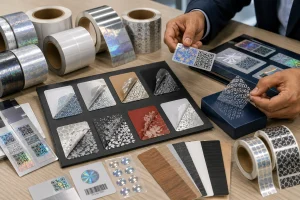
That is where layered protection solutions become commercially valuable. Combining security labels, anti tamper labels, security holograms, tamper-evident seals, and security tapes helps brands create stronger barriers against duplication and tampering.
For example:
- Tamper-Evident Seals help show visible evidence of opening or interference
- Security Tapes help protect products during storage and transit by providing tamper evidence and pilferage control
What Brands Should Do Next
If your business is seeing even two or three of the warning signs above, it may be time to review your current product protection strategy.
The most effective anti-counterfeit strategies usually combine multiple layers of protection based on:
- product category
- packaging structure
- distribution model
- market exposure
- counterfeiting risk level
For some brands, authentication through holograms may be the right starting point. For others, tamper evidence or secure sealing solutions may provide better initial protection.
The key is choosing solutions that fit both the product and the way it moves through the supply chain.
Final Takeaway
Counterfeiting is not only a product issue. It is a business trust issue, a channel issue, and a long-term brand reputation issue.
If your brand is seeing suspicious pricing, unusual complaints, packaging inconsistencies, or weak traceability, the risk may already be active in the market.
The right anti counterfeiting solutions in India can help brands strengthen authentication, reduce tampering risks, improve supply chain visibility, and protect customer trust before the damage becomes larger.
Talk to Veritech to explore the right combination of security labels, anti tamper labels, security holograms, tamper-evident seals, and security tapes for your products and supply chain protection needs.
Frequently Asked Questions
What are anti counterfeiting solutions?
Anti counterfeiting solutions are packaging and authentication technologies designed to help brands verify product authenticity, reduce tampering, and prevent unauthorized duplication or diversion.
Which industries need anti counterfeiting solutions the most?
Industries such as automotive, medicine & healthcare, FMCG, and beauty & personal care are often at higher risk because products move quickly and rely heavily on consumer trust.
How does a security hologram help protect products?
A security hologram adds a visible authentication layer that is difficult to replicate, helping brands make counterfeit duplication more difficult and easier to identify.
Why are anti tamper labels important?
Anti tamper labels help show whether a product package has been opened, altered, or interfered with during storage, transportation, or retail handling.
Why are security labels important in FMCG products?
A secure label in FMCG industry applications does more than carry branding. It helps improve authenticity verification, strengthens trust, and makes imitation harder for counterfeiters.