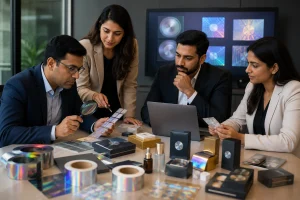
Holographic labels & security stickers—a new way of advancing your product’s security
Published on 26 May 2025
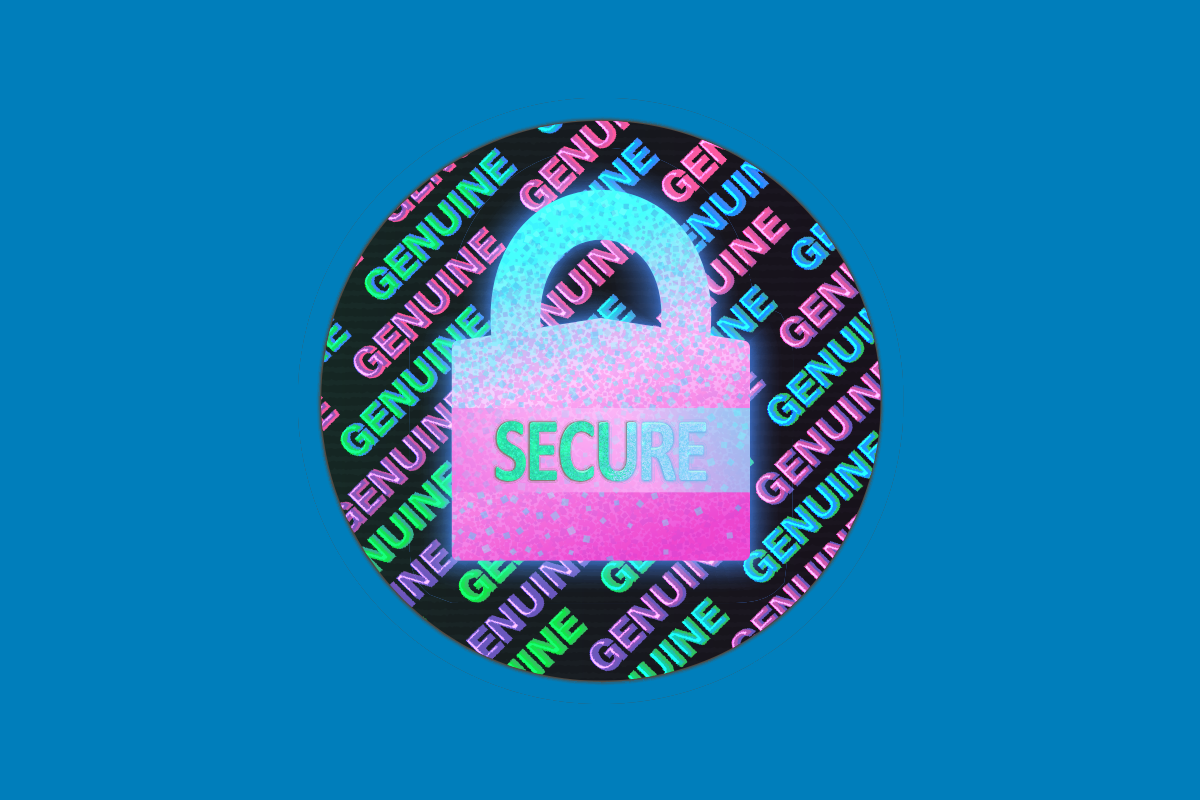
Holographic product labels are optical security labels that show changing colours, images or visual effects when viewed from different angles. Brands use them to make products easier to identify, discourage unauthorised copying and show signs of tampering when the label uses a destructible or residue-releasing material.
These labels can also include printed logos, microtext, serial numbers, barcodes or QR codes. When connected to a digital verification or track-and-trace system, a holographic label supports both visual checking and item-level authentication.
Holographic product labels are optical security labels that show changing colours, images or visual effects when viewed from different angles. Brands use them to make products easier to identify, discourage unauthorised copying and show signs of tampering when the label uses a destructible or residue-releasing material.
These labels can also include printed logos, microtext, serial numbers, barcodes or QR codes. When connected to a digital verification or track-and-trace system, a holographic label supports both visual checking and item-level authentication.
No security label can make counterfeiting impossible. A well-designed holographic label can, however, make packaging much harder to copy and give brands, distributors and buyers a practical way to check whether a product is genuine.
What are holographic product labels?
A holographic product label is a self-adhesive or applied security feature that contains diffractive optical elements. These elements interact with light and create movement, depth, colour shifts or image changes as the viewing angle changes.
Unlike an ordinary printed sticker, a properly designed holographic label requires specialised origination, mastering and production equipment.
It is also important to understand that not every holographic label is a true 3D hologram, and not every hologram is tamper-evident. The final security level depends on the optical design, substrate, adhesive, application method and any extra security features added to it.
For example, a label may break apart when removed, leave a VOID or honeycomb pattern, or include a unique QR code for digital verification.
How do holographic labels improve product security?
Holographic labels work best when they are part of a wider anti-counterfeiting plan. Their strength comes from combining visible identification, controlled manufacturing and, where needed, a digital product identity.
1. They make visual checking easier
The changing optical effect gives distributors, retailers and buyers something they can inspect immediately.
A custom design may include:
· Brand logos
· Kinetic movement
· Fine-line patterns
· Hidden images
· Colour changes
· Information visible only from certain angles
These visible details make genuine packaging easier to recognise. They also make a basic printed imitation easier to spot.
2. They make duplication more difficult
A standard label can often be photographed and reprinted. A customised security hologram is different because it depends on specialised optical origination, controlled masters, embossing equipment and production knowledge.
A counterfeiter may copy the shiny appearance, but reproducing several optical, printed and covert features accurately is much more difficult.
For this reason, brands usually use holographic security labels with other anti-counterfeiting measures instead of depending only on standard packaging graphics.
3. They can show signs of removal or tampering
A holographic security label can use destructible film, VOID release, full-release residue or another tamper-evident construction. If someone tries to remove the label, it leaves a visible sign.
Depending on the material, the label may:
· Break into small pieces
· Separate from its base
· Leave a VOID message
· Reveal a honeycomb pattern
· Leave residue on the packaging
· Become unsuitable for reuse
This can help show that a seal, closure, component or document has been opened, replaced or changed.
The right tamper-evident material depends on the packaging surface and the conditions in which the product is stored or used. Explore Veritech’s tamper-evident solutions for related options.
4. They allow brand-specific security features
Custom hologram stickers can include details that are unique to the brand, such as:
· Company logos
· Product names
· Microtext
· Serial numbers
· Variable information
· Demetallised areas
· Barcodes
· QR codes
· Hidden images
This turns the label into part of the packaging identity. It is harder to replace with a generic security sticker that anyone can purchase and reuse.
When printed and holographic features need to line up precisely, registered printed holograms can combine brand graphics with a more complex production process.
5. They can link physical and digital authentication
A holographic label can carry a unique serial number, barcode or QR code linked to a secure database.
After scanning the code, a user may be able to:
· Check whether the code is valid
· View approved product information
· Confirm the manufacturing batch
· Register the product or warranty
· Record where and when the code was scanned
· Identify repeated or suspicious scans
This gives the physical label an additional digital security layer.
Physical, digital and hybrid security: What is the difference?
A product-protection programme may use physical security, digital security or a combination of both.
Security approach
How it works
Typical features
Best suited for
Physical security
Adds visible, hidden or forensic features to a label or package
Holographic effects, microtext, security printing, tamper evidence and covert images
Fast visual checks and protection against copying or reuse
Digital security
Gives each product a digital identity that can be verified or tracked
Unique QR codes, serialisation, databases, scan records and alerts
Authentication, data capture and supply-chain visibility
Physical and digital security
Connects a secure physical label with a unique digital identity
Hologram with QR code or UID, tamper evidence and track-and-trace integration
Multi-layer brand protection and item-level verification
For products exposed to counterfeiting, diversion, warranty fraud or unauthorised distribution, a hybrid model is often the most practical choice.
The hologram gives users a visible feature to inspect. The unique digital identity allows them to verify the product and creates useful scan data. A track-and-trace solution can extend this system across production, warehousing, distribution and retail checkpoints.
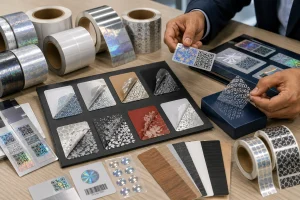
Common types of holographic security labels
The right label format depends on the product, the level of risk, the packaging line and the way users will verify it.
Custom printed hologram labels
These labels include a company name, logo, product mark or other brand-specific information. They are useful when the brand wants security and visual identity in the same label.
Tamper-evident hologram labels
These labels use destructible materials or release patterns that show when someone has tried to remove them.
They are often applied across:
· Carton openings
· Bottle closures
· Electronic components
· Warranty points
· Access panels
· Product containers
QR code or barcode holograms
A variable QR code, barcode or alphanumeric unique identifier can be printed on or added to the hologram.
This can support:
· Digital authentication
· Scan-based engagement
· Warranty registration
· Loyalty programmes
· Track-and-trace workflows
· Duplicate-scan detection
Registered printed holograms
In this format, printed graphics are aligned accurately with selected holographic elements.
The controlled alignment improves the appearance and makes casual reproduction more difficult than using a separately printed or generic label.
Demetallised holograms
Selected metallic areas are removed to create transparent text, logos or patterns.
This adds another visible design feature and can help the hologram blend more naturally with printed packaging.
True 3D and advanced optical features
High-depth images, kinetic effects, colour changes, concealed elements and other advanced optical features can create a more distinctive way to check authenticity.
These features are usually considered for:
· Premium products
· High-risk categories
· Official documents
· High-value components
· Packaging that needs stronger visual differentiation
Veritech’s secure hologram solutions include several physical security formats for different products and risk levels.
Advantages of holographic security stickers
A well-designed holographic product label can offer several practical benefits.
Faster visual checking
Retailers, distributors and buyers can inspect a recognisable optical feature without using a special reader. This makes first-level authentication quicker and easier.
Better protection against casual copying
Optical effects, controlled production and a customised design are harder to copy than standard printing alone.
Visible signs of tampering
The right label material can show when a security sticker has been removed, transferred or disturbed.
Stronger packaging differentiation
Dynamic optical effects can improve shelf visibility while still fitting into the overall packaging design.
Flexible customisation
Labels can be produced in different:
· Shapes
· Sizes
· Colours
· Substrates
· Adhesive types
· Release patterns
· Sheet or reel formats
Digital integration
QR codes, serialisation and variable data can connect the label with authentication, warranty, loyalty or traceability systems.
Use across different products
Holographic security labels can be applied to cartons, bottles, pouches, components, documents, certificates and identification products.
Even so, a label should be one part of a broader anti-counterfeiting solution. It should not be treated as a complete guarantee of authenticity on its own.
Where are holographic product labels used?
Hologram security labels are useful in industries where product authenticity, package integrity or controlled distribution matters.
Pharmaceuticals and healthcare
These labels can be applied to medicine cartons, bottles, blister packs, medical devices and diagnostic products.
A tamper-evident holographic label can help a buyer see whether a pack has been opened or changed.
FMCG and food products
Brands can use holographic labels on bottles, jars, pouches, cartons and promotional packs. They can support authentication while also helping the product stand out on the shelf.
Automotive parts
Common applications include:
· Spare parts
· Lubricants
· Filters
· Batteries
· Warranty points
· Replacement components
Unique codes can also help a brand manage warranties and identify unauthorised parts.
Electronics and appliances
Hologram security labels can be used on components, accessories, warranty seals, chargers and high-value devices.
Beauty and personal care
Cosmetics, fragrances, premium skincare and salon products can use holographic labels to help buyers distinguish genuine products from imitations.
Wine, liquor and tobacco
Possible applications include bottle-neck seals, closures, excise labels and products that move through higher-risk distribution channels.
Documents and identification
Holographic security features may be used on certificates, licences, ID cards, event passes and official records.
Industrial products
Chemicals, agrochemicals, tools, hardware and construction materials can use security labels to reduce unauthorised refilling, substitution and duplication.
The best position for the label is usually one that is easy to inspect but difficult to remove or replace without leaving evidence. A label placed across an opening or an important component can show tampering more clearly than one used only for decoration.
How to choose the right holographic label
Start by identifying the main risk and the people who will need to check the label.
1. Identify the security threat
Decide whether the label needs to address:
· Product counterfeiting
· Unauthorised refilling
· Package opening
· Label transfer
· Product diversion
· Warranty fraud
· Document alteration
2. Identify who will check the product
The label may need to work for consumers, retailers, distributors, field teams or investigators.
A visible feature is useful for buyers. Covert or forensic features are more suitable for trained or authorised personnel.
3. Check the packaging surface
Glass, plastic, coated paper, metal and textured surfaces need different adhesives and materials.
A label that works well on a paper carton may not stay secure on a refrigerated bottle or an uneven plastic component.
4. Consider the environment
Check whether the label will be exposed to:
· High or low temperatures
· Moisture
· Refrigeration
· Chemicals
· Abrasion
· Outdoor conditions
· Long-term storage
5. Choose the required tamper behaviour
Select a destructible, VOID, honeycomb or full-release material based on the application and packaging surface.
6. Decide whether digital verification is needed
Add serialisation, a QR code or another unique identifier when each product needs its own digital identity.
7. Confirm how the label will be applied
The packaging line may require:
· Sheets
· Reels
· Manual application
· Automatic dispensing
· High-speed application
8. Make the verification process clear
Buyers and channel partners should know which optical feature to check, where to scan the code and what confirmation message they should receive.
Carry out a security assessment before developing the artwork. Adding many features without a clear verification process can increase the cost without improving real protection.
Why combine holographic labels with a wider security system?
A counterfeit product may copy several visible parts of the original packaging. That is why many brand-protection programmes combine visible, covert and digital controls.
A hologram supports quick visual checking. Covert or forensic features allow trained teams to carry out a deeper inspection. A unique digital code lets users check the product identity and scan history against a controlled system.
This combination can also give the brand useful information. Repeated scans, scans outside an approved market or unusual movement through the supply chain may point to duplication, diversion or grey-market activity.
Location data may be added through logistics or track-and-trace systems. GPS, however, is not a feature of the holographic label itself.
A complete programme may connect:
· The physical label
· The digital database
· The packaging process
· Channel training
· Scan management
· Incident investigation
· Enforcement procedures
Each layer should have a clear purpose. Adding security features only helps when users know how to check them and the brand has a process for acting on suspicious results.
Holographic product labels from Veritech
Veritech develops customised holographic and secure label solutions for product authentication, tamper evidence and brand protection.
Depending on the application, the solution may include:
· Optical effects
· Brand graphics
· Registered printing
· Variable data
· Serial numbers
· Barcodes
· QR codes
· Tamper-evident materials
· Digital authentication
· Track-and-trace integration
The right construction depends on the product category, packaging surface, application method, threat level and verification process.
Brands can also connect physical labels with digital authentication and track-and-trace tools to create a multi-layer security system.
When planning a label, start with the security risk rather than choosing a visual effect first. The final holographic product label should be distinctive, suitable for large-scale production, compatible with the packaging line and easy for authorised users to check.
Frequently asked questions
Are all holographic labels tamper-proof?
No. The holographic effect provides optical security, but tamper evidence depends on the material, adhesive and release construction.
Choose a destructible, VOID, honeycomb or another tamper-evident format when removal needs to leave a visible sign.
Can hologram stickers be copied?
A counterfeiter may create a simple shiny imitation. Accurately reproducing a customised hologram with several optical, printed and covert features requires specialised technology and controlled production.
No single label can stop every form of counterfeiting. Higher-risk products should use more than one security layer.
Can a QR code be added to a holographic label?
Yes. A static or unique QR code can be printed on or integrated with a holographic label.
Unique codes are more useful for item-level authentication, duplicate-scan detection, warranty registration and traceability.
What can be customised on a hologram security label?
Custom options may include a company logo, product mark, text, microtext, serial number, barcode, QR code, hidden image, colour effect, demetallised area and tamper-evident pattern.
The available features depend on the label size, security needs and production method.
Which industries benefit most from holographic labels?
Holographic labels are commonly used for pharmaceuticals, FMCG, automotive parts, electronics, beauty products, wine and liquor, industrial goods and secure documents.
They are especially useful when counterfeiting, unauthorised refilling, product diversion or warranty fraud creates a commercial or safety risk.
Is a holographic label enough for complete brand protection?
Usually not. A holographic label is a useful physical security feature, but higher-risk products benefit from tamper evidence, covert features, serialisation, digital authentication, track and trace, channel controls and enforcement procedures