How Are Security Stickers Printed? Materials, Security Features and Finishing Options
Published on 12 Aug 2026
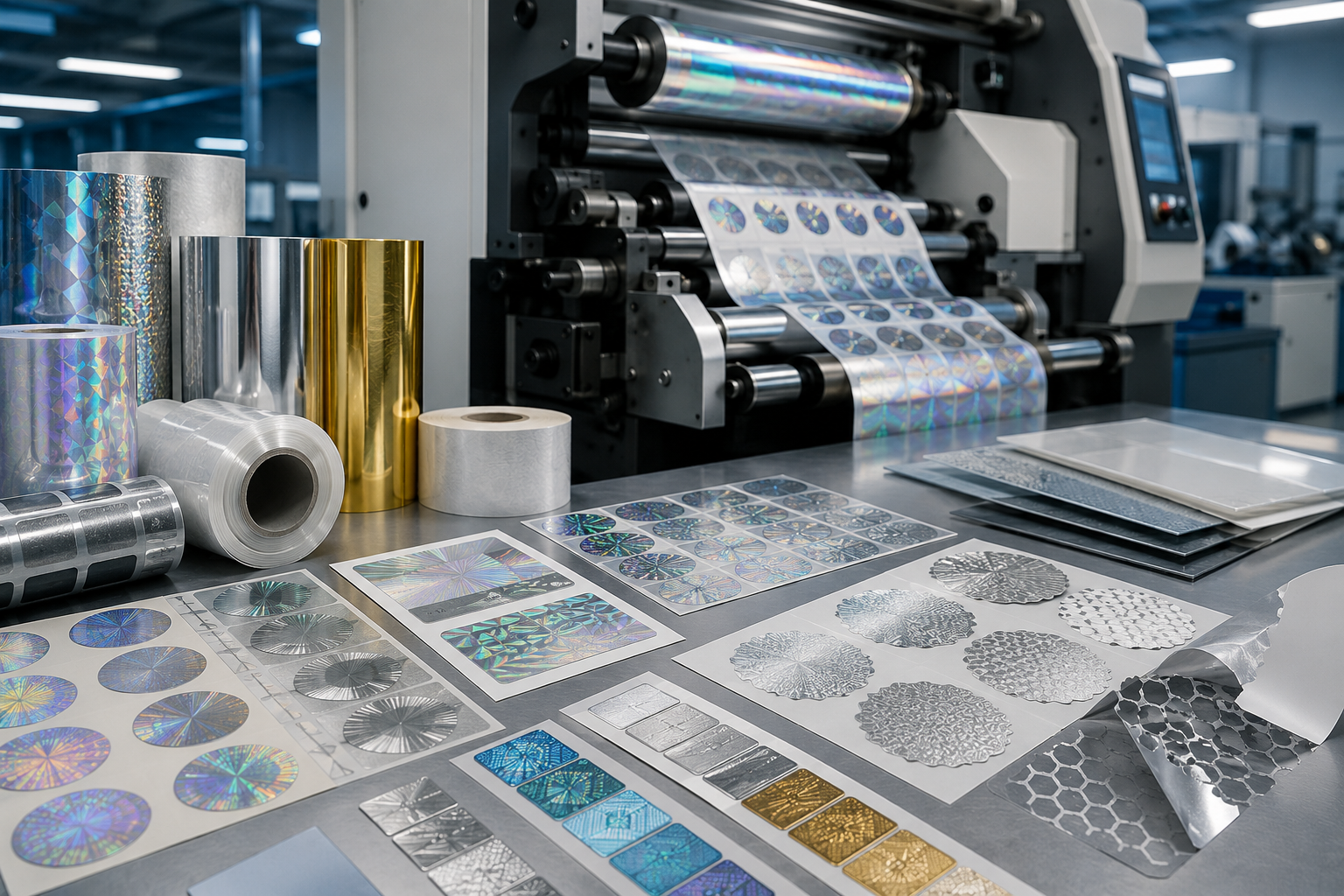
Security sticker printing is not simply standard label printing with an extra graphic added at the end. A security sticker is built as a system: the face material, adhesive, release liner, printed design, tamper behaviour, authentication features and finishing all have to work together on the intended pack.
The production method changes with the surface, expected product life, run length, application speed and the person who is expected to verify the sticker. A label for a smooth carton may need a very different construction from one used on textured plastic, painted metal or a closure that moves during opening.
Security sticker printing is not simply standard label printing with an extra graphic added at the end. A security sticker is built as a system: the face material, adhesive, release liner, printed design, tamper behaviour, authentication features and finishing all have to work together on the intended pack.
The production method changes with the surface, expected product life, run length, application speed and the person who is expected to verify the sticker. A label for a smooth carton may need a very different construction from one used on textured plastic, painted metal or a closure that moves during opening.
For brands evaluating a security application, Veritech’s High-Security Labels provide useful context for the types of tamper-evident and authentication constructions that can sit behind a finished security sticker.
Quick Answer: How Are Security Stickers Printed?
Security stickers are typically produced by first defining the security requirement and application surface, then selecting the face material and adhesive, choosing a suitable printing process, adding tamper or authentication features, printing any variable data, applying protective or decorative finishes, converting the web into the required shape or reel format, and testing finished samples before production approval.
The exact sequence can vary by construction. What matters is that the printed feature, adhesive performance, tamper response and any code or serialisation are approved as one finished system rather than as separate components.
Security Sticker Printing Process at a Glance
Stage
What Is Decided
Why It Matters
1. Define the security job
Threat, verification user, pack surface and expected life
Prevents a generic label from being specified for the wrong problem
2. Select material & adhesive
Paper, film, destructible stock, adhesive and liner
Controls durability, bonding and removal behaviour
3. Choose printing method
Flexo, screen, offset, gravure, digital or inkjet as appropriate
Must suit artwork, run length, registration and variable data needs
4. Add security features
Tamper response, holography, microtext, UV, serials or codes
Creates the evidence or authentication step the user needs
5. Print variable data
Serial numbers, barcodes, QR codes or batch information
Requires uniqueness, readability and reconciliation controls
6. Finish & convert
Varnish, laminate, die cut, slit, sheet or reel preparation
Affects protection, appearance and application performance
7. Test samples
Adhesion, dwell, temperature, abrasion, scanning and removal
Confirms performance on the real pack
8. Approve production
Controlled sample, specification and acceptance criteria
Creates the reference for release and repeat orders
1. Start With the Security Requirement, Not the Artwork
The first production decision is not colour or sticker shape. It is the job the sticker has to perform. Does the brand need visible evidence of removal? A way to make label transfer difficult? A feature a dealer can inspect? A unique code connected to controlled data? Different threats lead to different constructions.
This step also identifies the verification user. Consumers, retailers, distributors and trained inspectors do not necessarily need the same feature. A visible cue may be appropriate for one user, while another check can be reserved for trained personnel.
Where the requirement is broader product authentication or brand protection, Veritech’s Anti-Counterfeiting Solutions show how physical security elements can be considered within a larger protection programme.
2. Select the Face Material, Adhesive and Release Liner
The face stock is the printable material you see. Common options can include paper and film-based materials, while security applications may use specialised stocks designed to fracture or reveal removal. The adhesive beneath the face stock is just as important because the same printed label can behave differently on glass, coated board, high- or low-energy plastics, painted metal or textured surfaces.
For example, Destructible Vinyl is designed to break apart rather than lift away cleanly. That behaviour is fundamentally different from an ordinary product label and needs to be tested on the actual substrate.
The release liner and final reel format matter too, especially when labels will be dispensed automatically. Liner stiffness, die-cut depth, gap and winding direction can all affect how reliably the label releases and applies on the production line.
3. Choose a Printing Method That Fits the Job
Security labels can involve flexographic, screen, offset, gravure, digital or inkjet printing, depending on the artwork, quantity, substrate, coatings, registration tolerances and whether the job contains variable information. There is no single printing method that is automatically best for every security sticker.
A short run with changing data may favour a different production route from a large repeat run with tight colour and registration requirements. Some projects combine more than one process because static brand artwork and unique data have different production needs.
The important question is whether the selected process can reproduce the approved artwork and security elements consistently at production speed—not whether it produces one impressive sample.
4. Add Tamper-Evident and Authentication Features
Security features are added according to the threat and the person who will perform the check. Options may include tamper-release constructions, destructible stock, holographic effects, microtext, ultraviolet-visible print, serial numbers and authenticated codes.
Tamper-evident constructions can leave different kinds of evidence. A VOID Tamper label may reveal a message or pattern after removal, while Honeycomb Tamper uses a different visible release effect. Neither option should be selected from appearance alone; the final choice depends on the surface and the evidence the brand wants to leave behind.
Layering features can be useful when each layer has a defined purpose. Adding features without deciding who checks them, how they are checked and what happens after a failed check can make the specification more complex without making the operating process clearer.
5. Print Serial Numbers, Barcodes or QR Codes When Needed
Static artwork repeats on every label. Variable data introduces a second control problem because every printed identifier may need to be unique, readable and reconciled against the production record.
A variable-data workflow can include sequential numbering, barcode or QR generation, print inspection, duplicate prevention, rejected-label handling and reconciliation of unused ranges. If a code is connected to a digital verification system, the data rules and response shown after scanning also need to be defined before production.
For applications that use machine-readable identification alongside a holographic feature, Barcode Holograms are one example of how physical and data-driven elements can appear in the same security context.
6. Apply Finishes and Convert the Printed Web
Once the core printing is complete, the label may need varnish, lamination or another controlled surface treatment. Finishing can protect print, change gloss or feel, improve durability and influence how codes appear under light. It can also introduce trade-offs: a highly reflective surface, for example, may affect scan readability depending on the code and viewing conditions.
Converting then turns the printed web into usable labels. Die cutting defines the shape. Slitting creates the required reel width. Labels may be supplied in sheets or on reels with a specified core, maximum roll diameter, pitch, gap and winding direction.
For automatic application, these details are part of the production specification rather than shipping preferences. The label has to run cleanly through the applicator at the intended speed.
7. Test the Finished Security Sticker on the Real Pack
A loose sample can confirm appearance, but it cannot prove full application performance. The finished label should be applied to the real substrate using realistic pressure and dwell time, then checked under the conditions the pack is expected to face.
Depending on the application, testing may cover initial tack, ultimate adhesion, temperature, humidity, abrasion, transport handling, edge lift, code readability and the intended tamper response. Pass criteria should be written down before approval so the production team is not judging performance subjectively later.
ISO 22383:2020 provides guidance for evaluating authentication solutions in relation to material goods and their life cycle. In practical buying terms, that reinforces the need to evaluate the feature in the context of the finished product rather than as an isolated printed sample.
8. Approve the Specification and Protect Repeat Production
Production approval should create a controlled reference that another team can understand without relying on the memory of the original project members. Record the material or construction, adhesive, artwork version, dimensions, security features, data rules, colour or effect reference, die line, production format, test results and authorised sample.
Repeat orders should refer back to that approved specification. If a substrate, coating, printer, applicator, data source or security component changes, review the tests that depend on it before release. A visually similar label can still behave differently after a material or process substitution.
Manufacturing controls, inspection capability and repeatability are also part of the supplier decision. Veritech’s Technology Infrastructure page provides additional context on its production and technology setup.
Security Sticker Printing vs Standard Product Label Printing
The two can use some of the same printing and converting technologies, but the approval logic is different. A standard label is generally judged mainly on branding, information, durability and application. A security sticker adds a defined tamper, authentication or controlled-data objective.
If the project is primarily about branding and product information rather than tamper evidence or authentication, Veritech’s Product Labels category may be the more relevant starting point.
What to Include in a Security Sticker Printing Brief
A good production brief removes assumptions before artwork and tooling are approved. Share enough information for the supplier to recommend a construction rather than quote a generic sticker.
The product and packaging surface, including coatings or texture
The available label area, dimensions and any curved or moving surfaces
The threat or event the sticker should reveal, deter or help verify
The person who will check the feature and the expected verification method
Expected shelf or service life and relevant storage conditions
Order quantity, repeat-order expectations and application method
Artwork, colour requirements and any fine security detail
Any serial number, barcode, QR code or variable-data requirement
Reel or sheet format, core, winding direction and applicator details
Testing requirements, acceptance criteria and required delivery schedule
Security Sticker Printing Approval Checklist
The actual packaging substrate has been used for testing.
The label material, adhesive and intended tamper response are documented.
The security feature has a defined user and verification method.
Artwork and fine details are readable at final production size.
Variable-data rules include readability, duplicates, rejects and reconciliation where relevant.
Finishing and reel or sheet format match the production process.
The finished sample passes written adhesion and tamper criteria.
An approved sample and specification are retained for repeat orders.
Any later material, artwork, data or process change triggers review.
Frequently Asked Questions
What materials are commonly used for security sticker printing?
The correct material depends on the pack and security job. Paper and film-based stocks can be used, while tamper-sensitive applications may need specialised constructions such as destructible or transfer materials. Material should be selected together with the adhesive and tested on the intended surface.
Which printing method is best for security stickers?
There is no single best method. Flexographic, screen, offset, gravure, digital and inkjet processes can all be relevant. The right choice depends on run length, substrate, artwork, registration, coatings, variable data and the security features being produced.
Should every security sticker have a QR code?
No. A QR code is useful when someone has a reason to scan it and the response supports a clear verification or information task. For some products, visible tamper evidence or another inspection feature may be more practical.
Can security stickers be applied automatically?
Many constructions can be supplied on reels for automatic application. The supplier normally needs details such as application direction, core size, roll diameter, pitch, gap, sensor requirements and target line speed. A line trial is advisable before a full production run.
Are security stickers impossible to copy?
No security feature should be presented as absolutely impossible to copy. A well-designed construction can increase the effort required to imitate or transfer a label, make removal visible and provide better evidence for the people responsible for verification.
How long should a security sticker be tested before approval?
There is no universal dwell time. Testing should reflect the adhesive, surface and product life. Teams should check both early application and the ultimate bond, then expose the sample to the relevant heat, cold, humidity, abrasion, transport or handling conditions.
Discuss a Security Sticker Printing Requirement With Veritech
A useful first conversation starts with the pack, not a generic sticker specification. Share the packaging surface, available label area, quantity, application method, expected life, security concern and any serial-number, barcode or QR-code requirement.
Veritech can then evaluate a suitable material, tamper or authentication construction for sampling. Explore High-Security Labels or contact the Veritech team to discuss the application.