How Barcode and QR Code Labels Help Protect Your Brand
Published on 03 Oct 2025
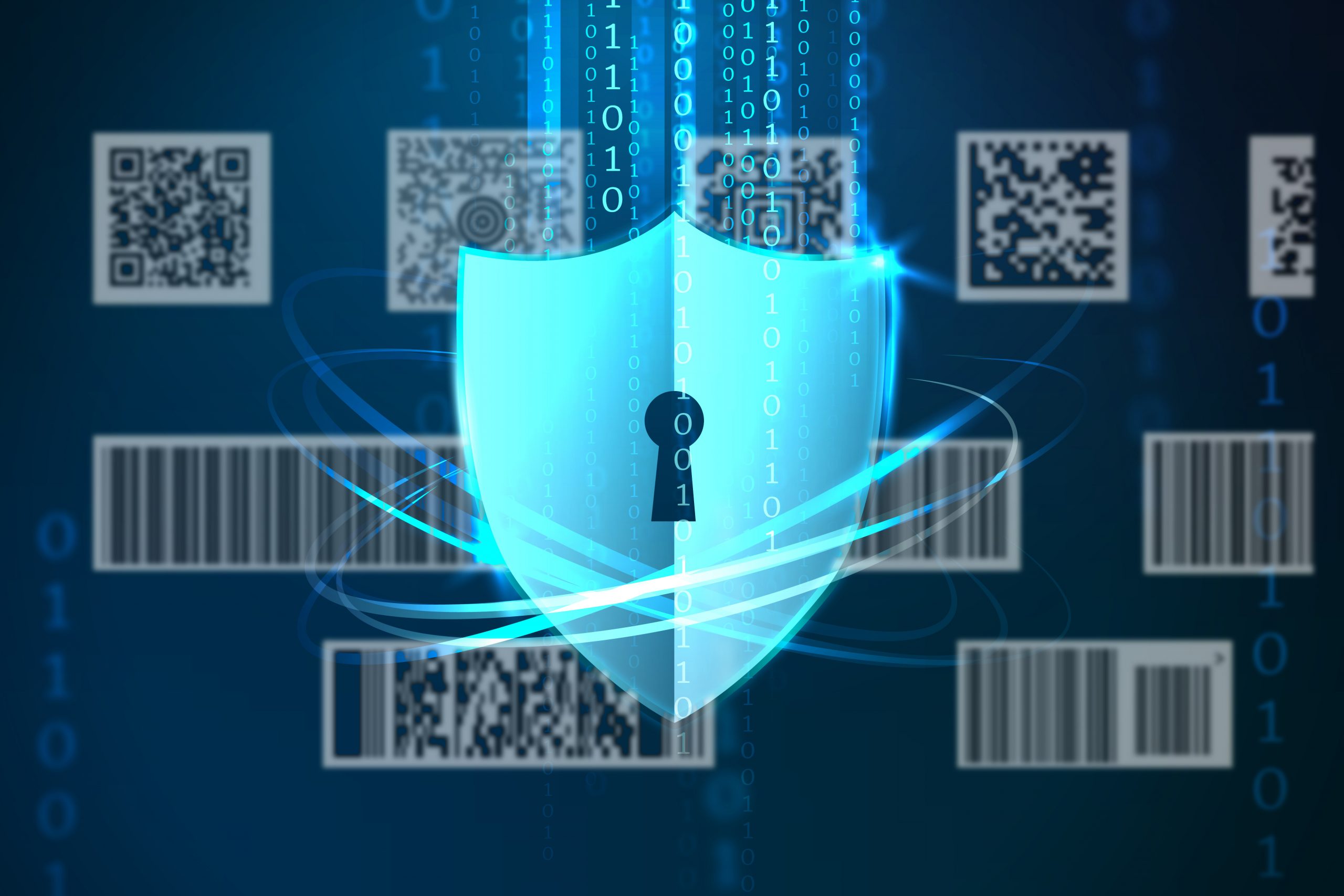
Barcode and QR code labels are widely used to identify products, process transactions and connect physical packaging with digital information. They support retail checkout, inventory control, logistics, warranty registration, product information, traceability and customer engagement across industries such as FMCG, pharmaceuticals, healthcare, automotive parts, electronics, food and beverages and e-commerce.
Barcode and QR code labels are widely used to identify products, process transactions and connect physical packaging with digital information. They support retail checkout, inventory control, logistics, warranty registration, product information, traceability and customer engagement across industries such as FMCG, pharmaceuticals, healthcare, automotive parts, electronics, food and beverages and e-commerce.
However, printing a barcode or QR code on a product does not automatically create brand protection. A shared code used on every package can usually be photographed and copied. Stronger protection comes from assigning each item a controlled identity, linking that identity to a secure database, monitoring scan activity and combining the code with physical security features where the risk justifies it.
What are barcode and QR code labels?
Barcode and QR code labels carry machine-readable information that a scanner or compatible camera can interpret. In many systems, the code does not store every product detail directly. Instead, it carries an identifier that retrieves the relevant information from a connected database.
What is a barcode?
A traditional barcode represents data through lines, spaces or other machine-readable patterns. It is commonly used for product identification, retail checkout, warehouse processing, shipment handling, batch management, returns and warranty workflows. A standard retail barcode often identifies the product category or stock-keeping unit rather than a particular individual item.
What is a QR code?
A QR code is a two-dimensional barcode made from a pattern of dark and light squares. It can hold more information than many one-dimensional barcodes and can be scanned using most modern smartphones. Depending on its configuration, it may open a product page, display batch or expiry information, start warranty registration, connect to an authentication portal or provide instructions and customer support.
The QR image itself is only a data carrier. Its brand-protection value depends on the identity behind it, the security of the supporting platform and the way scan results are monitored.
Main barcode and QR code formats
One-dimensional barcodes
One-dimensional barcodes use parallel lines and spaces of different widths. Common examples include EAN, UPC, Code 128, GS1-128 and ITF-14. These formats are effective for retail, logistics and inventory operations, but they usually hold limited information and often identify a product type rather than an individual unit.
Two-dimensional barcodes
Two-dimensional formats encode information horizontally and vertically, allowing them to hold more data within a smaller space. QR Code, Data Matrix, GS1 DataMatrix, PDF417 and Aztec Code are common examples. A 2D barcode remains a printed machine-readable symbol, not a hologram, although it can be integrated with a holographic or tamper-evident security label.
Static and serialized QR codes
A static QR code is normally identical across every package and commonly directs users to the same product page, instruction manual or campaign. This is useful for communication but does not verify an individual product because the image can be copied easily.
A serialized QR code is different because each item or packaging unit receives a unique identity. When scanned, the platform can check whether the code exists, matches the expected product, has been activated, has appeared before, has been deactivated or is being scanned in an unexpected market. This makes serialized codes more suitable for product authentication, warranty control and track-and-trace programmes.
Printing unique codes is only the first step. Code generation, assignment, inspection, activation, rejection and deactivation must be controlled so that unused or damaged identities cannot be applied to unauthorised products.
How barcode and QR code labels protect a brand
They give each product a controlled identity
A serialized label can connect an individual item with a digital record containing its product name, stock-keeping unit, batch, manufacturing date, expiry date, production facility, intended market, warranty status and distribution status. This allows the business to distinguish one unit from another instead of relying only on a shared product code.
They support product authentication
Consumers, distributors and field teams can scan a unique code to check whether the identity is recognised by the brand’s system. A useful verification page should clearly explain whether the code is valid, invalid, already scanned, deactivated, associated with a recall or under review. A generic message such as “Thank you for scanning” does not confirm that the product has been authenticated.
Counterfeiters may copy a genuine visible code and apply it to several unauthorised products. The first copied label may return a valid result if the original identity has not been scanned. Repeated scans, scans from distant places within a short period, activity outside the intended market or scans before official dispatch can create warning signals.
These signals do not prove counterfeiting on their own. A brand should evaluate scan history alongside packaging, sales-channel and distribution records before deciding how to respond.
They improve supply-chain traceability and recall control
Unique identities can be linked to manufacturing and distribution events such as packaging, aggregation, dispatch, warehouse receipt, distributor transfer, retail receipt, return, recall and disposal. This helps businesses investigate where a suspicious product came from and whether it followed an approved route.
A track-and-trace solution can connect serialized identities with selected supply-chain records. When a recall occurs, this information may help identify affected units, the cartons or pallets that contain them, the distributors that received them and whether the products were returned or destroyed. Better traceability can reduce the need to investigate or withdraw unrelated stock.
They strengthen warranty and returns management
A serialized security barcode or QR code can connect the product with its warranty, service and return history. The system may show whether the unit was registered, sold through an authorised channel, involved in a previous claim or returned under a different identity. This can help brands investigate duplicate warranty claims, product substitution and unauthorised returns.
They create a direct consumer connection
A brand-controlled QR experience can combine authentication with product instructions, ingredient or material information, warranty registration, loyalty enrolment, recall notices, customer support and recycling guidance. These functions can strengthen trust, provided the experience clearly separates general product information from an actual authentication result.
Why an ordinary barcode is not enough
A visible barcode or QR code can be photographed and reproduced. A shared retail barcode may identify what the product is, but it does not prove that a particular physical item is genuine. The security comes from the complete system: unique and unpredictable identities, controlled code generation, database verification, activation rules, duplicate-scan monitoring and a clear investigation process.
For higher-risk products, digital identification should be supported by physical security. Tamper-evident materials can reveal label removal or package opening, while custom holograms, security inks, microtext and covert features make visual imitation more difficult. Track-and-trace records provide further context by showing where the product was expected to move.
Barcode holograms and QR code holograms
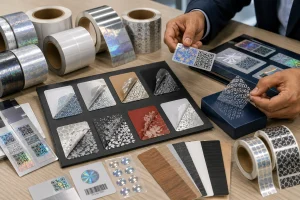
A barcode hologram or QR code hologram combines machine-readable data with an optical security feature. The code provides a digital layer for identification, product authentication, traceability, warranty registration or loyalty functions. The holographic layer provides a visible reference and may include kinetic movement, colour changes, microtext, hidden images, demetallised areas, covert elements or tamper-evident construction.
These layers serve different purposes. A user can scan the code to check the digital identity while also inspecting a brand-specific optical feature that is more difficult to reproduce than ordinary printed artwork. Veritech’s barcode hologram solutions combine variable data with customised holographic security. Brands can also review how hologram stickers with QR codes bring authentication, warranty and loyalty functions into one label.
Choosing the right label construction
The code and database receive most of the attention, but label performance also depends on the face material, print method, protective coating and adhesive. A security barcode label that becomes unreadable, detaches from the surface or fails under normal operating conditions cannot support reliable verification.
Face stock and protective coating
Paper may suit dry, short-life indoor applications, while polypropylene, polyester, polyethylene and other synthetic films are generally more suitable where the label faces moisture, chemicals, friction, heat or outdoor exposure. Destructible, VOID and holographic films may be selected where removal or transfer is a concern.
A laminate or topcoat can improve resistance to moisture, oils, cleaning, scratching, abrasion and ultraviolet exposure. The protective layer must not reduce contrast or create glare that interferes with barcode scanning.
Printing method and durability
Direct thermal, thermal transfer, inkjet, laser, flexographic and digital printing are used for different label requirements. Direct thermal is a printing method rather than a security feature and is generally better suited to short-life applications. Thermal transfer and durable digital methods may be more appropriate when the code must survive heat, moisture, chemicals or extended handling.
The code should be tested for size, contrast, resolution, quiet zone, surface curvature, production speed and scanner compatibility. Smartphone testing is especially important for consumer-facing QR labels.
Adhesive and tamper evidence
Adhesive selection depends on the packaging material, surface energy, curvature, temperature, moisture, oil or dust exposure, application speed and expected service life. A temporary label may use a removable adhesive, whereas a security application may require a permanent, destructible or VOID construction.
Tamper-evident labels may fragment, leave a VOID message, transfer a pattern, reveal a honeycomb image or become permanently distorted when removal is attempted. Tamper evidence does not make interference impossible; it makes interference easier to notice.
Barcode and QR label comparison
Label approach
Best suited to
Main limitation for brand protection
Shared 1D barcode
Retail checkout and product identification
Identifies a product type, not an individual unit
Static QR code
Product information, campaigns and instructions
Can be copied and does not authenticate one item
Serialized barcode or QR code
Item-level authentication, warranty and traceability
Requires controlled identities, a database and monitoring
Barcode or QR hologram
Digital verification plus visual authentication
Must be customised and integrated into a wider security process
Tamper-evident serialized label
High-risk packs where opening or transfer matters
Performance depends on the surface, adhesive and application quality
Industry applications
FMCG, food and beverages
FMCG and food brands can use serialized labels for inventory, promotions, loyalty, batch information, recall communication and consumer verification. High-volume deployment requires reliable variable-data printing, code inspection and database management. For products vulnerable to refilling or substitution, tamper evidence and secure optical features can provide an additional layer.
Pharmaceuticals and healthcare
Healthcare products may use GS1 DataMatrix and other approved formats for product identification, batch information, expiry details, serialization and traceability. The applicable code, data structure and reporting process depend on the product and market regulations. Authentication labels should support, not replace, pharmaceutical quality controls and professional verification.
Automotive parts and electronics
Automotive and electronics brands can connect serial identities with distributor records, warranties, installation or service history and authorised seller information. Labels must be durable enough for the storage and operating environment, and tamper-evident constructions may help reveal unauthorised opening or component substitution.
Retail and e-commerce
Retailers use barcodes for checkout, stock control and order processing. Serialized codes can strengthen returns management and verification for high-value goods by connecting each unit to its sales and claim history.
Travel, logistics and hospitality
These sectors commonly use barcodes and QR codes for tickets, reservations, access control, baggage, shipments and digital services. Such uses mainly support identification and transactions. They become product-security tools only when the codes are uniquely controlled and connected to verification or traceability processes.
How to design a secure barcode or QR code label
Define the purpose and verification users
Start by deciding whether the label is intended for identification, authentication, inventory, traceability, warranty, loyalty, consumer information or tamper evidence. Also determine who will use it. A consumer needs a simple smartphone experience, while warehouse teams, distributors and investigators may require different scanners, data and access rights.
Select the right code and decide on serialization
A retail barcode, logistics code, Data Matrix and consumer QR code serve different needs. Selection should consider the available space, required data, scanner compatibility, point-of-sale use, industry standards and regulatory obligations. Shared codes are suitable for general identification, but item-level authentication and traceability usually require serialization.
Match the material to the product environment
Review the packaging surface, product life cycle, exposure to heat, moisture, chemicals, abrasion and ultraviolet light, and whether the label will be applied manually or automatically. The adhesive, printing method and protective coating must be tested together on the actual surface.
Add physical security according to risk
Higher-risk products may combine serialization with a custom hologram, security inks, microtext, hidden images, tamper-evident materials or restricted covert features. Adding every possible feature is unnecessary. The design should address the most realistic threats and provide clear verification methods for each user group.
Connect the label to a controlled platform
The supporting system should control code generation, product assignment, activation, verification, scan history, deactivation, recall status and user permissions. It should also define what happens when a code is invalid, duplicated, damaged or scanned in an unexpected market. Detection creates value only when teams know how to investigate and respond.
How Veritech supports barcode and QR code brand protection
Veritech develops customised barcode, QR code and holographic label solutions for product identification, authentication and traceability. Depending on the application, a solution may combine unique barcodes, serialized QR codes, variable-data printing, security barcode labels, barcode holograms, QR code holograms, tamper-evident materials, custom security holograms, digital authentication, track-and-trace integration and warranty or loyalty workflows.
The most suitable solution should make scanning easy for authorised users while making unauthorised copying, transfer and reuse harder to conceal.
Frequently asked questions
What is a security barcode label?
A security barcode label combines machine-readable identification with controls such as serialization, database verification, tamper evidence or holographic features.
Can a normal barcode protect a brand?
A standard shared barcode helps identify a product type but offers limited protection against copying. Stronger brand protection generally requires a unique identity connected to a controlled verification system.
Are 2D barcodes the same as holograms?
No. A 2D barcode is a printed machine-readable data symbol. A hologram is an optical security feature. Both can be combined within one label.
What is the difference between a barcode and a QR code?
Traditional linear barcodes use lines and spaces and generally carry less data. QR codes are two-dimensional, can hold more information and are easier for consumers to scan with smartphones.
Can a QR code verify a genuine product?
A unique QR code connected to a secure database can support product verification. A static QR code shared across every product cannot authenticate an individual unit.
Can counterfeiters copy QR codes?
Yes. A visible code can be photographed and reproduced. Unique serialization, duplicate-scan monitoring, physical security and distribution records help brands identify suspicious use.
What is a barcode hologram?
A barcode hologram is a security label that combines a machine-readable code with customised holographic features for digital and visual verification.
What is direct-thermal barcode printing?
Direct thermal printing uses heat-sensitive label material. It is useful for selected short-life applications but is not an anti-counterfeiting feature by itself.
Which label material is best for outdoor use?
Synthetic films, durable printing and UV-resistant protection are generally more suitable than uncoated paper, but the final selection should be based on the exact exposure conditions and packaging surface.
Can barcode labels support track and trace?
Yes. When codes are unique and linked to recorded supply-chain events, they can support traceability at item, carton, case or pallet level.
Conclusion
Barcode and QR code labels can improve product identification, inventory control, authentication, warranty management and supply-chain traceability. Their brand-protection value, however, depends on how the complete system is designed.
A shared barcode or static QR code can be copied easily. A stronger approach assigns products unique identities, connects them to a controlled database, monitors scan activity and combines digital verification with suitable physical packaging security.
When serialized codes, holograms, tamper-evident materials and track-and-trace records work together, brands can make suspicious products easier to identify, investigate packaging fraud more effectively and give authorised users a clearer way to verify product identity.