Difference Between Tamper Evident and Tamper Proof Labels
Published on 22 Aug 2026
The difference between tamper evident and tamper proof labels is easiest to understand by looking at what happens when someone tries to remove them.
A tamper-evident label is designed to leave a visible or irreversible indication of interference. It may reveal a VOID message, separate into layers, leave a pattern behind or break apart.
“Tamper proof,” by contrast, is often used commercially to describe packaging that is highly resistant to interference. Taken literally, however, tamper proof suggests that tampering cannot happen at all. That is rarely a useful promise for a pressure-sensitive label.
For most packaging-security applications, tamper evident is therefore the more precise concept: the objective is to make attempted interference difficult to conceal.
The difference between tamper evident and tamper proof labels is easiest to understand by looking at what happens when someone tries to remove them.
A tamper-evident label is designed to leave a visible or irreversible indication of interference. It may reveal a VOID message, separate into layers, leave a pattern behind or break apart.
“Tamper proof,” by contrast, is often used commercially to describe packaging that is highly resistant to interference. Taken literally, however, tamper proof suggests that tampering cannot happen at all. That is rarely a useful promise for a pressure-sensitive label.
For most packaging-security applications, tamper evident is therefore the more precise concept: the objective is to make attempted interference difficult to conceal.
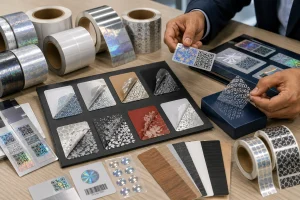
Veritech’s current tamper-evident seal portfolio includes VOID tamper, destructible vinyl, full-release and honeycomb constructions.
What Is a Tamper-Evident Label?
A tamper-evident label changes when removal or interference is attempted.
The evidence can appear in several ways. A message may remain on the package. The label may split between layers. A brittle material may fragment. A hidden pattern may appear.
The purpose is not to make a package physically impossible to open. It is to make unauthorised opening or label removal harder to hide.
Veritech describes its VOID tamper labels as pressure-sensitive security labels that change permanently when removal is attempted. Full-transfer, partial-transfer and non-transfer designs can place the evidence on the application surface, within the label or across both.
What Does “Tamper-Proof Label” Usually Mean?
Buyers commonly search for “tamper-proof stickers” when they actually want one of three outcomes:
A label that cannot be cleanly removed and reused
A seal that visibly reveals opening
A construction that discourages unauthorized access
These are valid requirements. The problem is the word proof.
Even a strong seal can usually be cut, destroyed or removed with sufficient effort. The useful security question is whether the attempted interference will leave reliable evidence and whether the label can be reused convincingly afterwards.
This distinction protects brands from making absolute packaging claims that the construction itself cannot support.
Difference Between Tamper Evident and Tamper Proof Labels at a Glance
Factor
Tamper Evident
“Tamper Proof”
Practical purpose
Reveal attempted interference
Usually means resist or discourage interference
Removal
Intended to trigger visible change
No universal technical behaviour
Evidence
VOID, residue, breakage, separation or pattern
Depends on the actual construction
Reuse resistance
Can be specifically engineered
Depends on what product is being called tamper proof
Better specification term
Yes
Often too broad
Buyer question
What evidence appears after removal?
What behaviour do you actually require?
For procurement teams, specifying the required removal behaviour is far more useful than requesting a “tamper-proof sticker.”
Main Types of Tamper-Evident Labels and Seals
VOID Tamper
A VOID construction reveals a message when removal is attempted.
Depending on the design, evidence can remain on the package, appear in the label or split across the two. Custom wording such as OPENED or another message can also be used depending on construction.
Destructible Vinyl
Destructible vinyl is designed to break into small pieces during removal.
This makes clean transfer from a genuine product to another surface difficult. The construction is useful where visible removal evidence and resistance to reuse are important.
Full Release Tamper
A full-release tamper solution uses a layered construction in which the top layer separates while a base layer remains attached to the substrate, producing clear removal evidence.
Honeycomb Tamper
A honeycomb construction reveals a visible honeycomb pattern when peeled.
The key point is that these designs create different kinds of evidence. Selection should depend on what the inspector needs to see after interference.
When Should You Use a Tamper-Evident Label?
Consider the application rather than the industry name alone.
For an electronics enclosure, the objective may be to show that a device or service panel has been opened.
For an automotive component, it may be important to discourage reuse of a genuine warranty label on a counterfeit part.
On a pharmaceutical pack, a seal can provide an additional visual indication that packaging has been disturbed before it reaches the user.
For logistics containers, the purpose may be to give receiving teams an obvious check before accepting a shipment.
For FMCG, tamper evidence can support packaging integrity where a closure or access point needs to show signs of interference.
Veritech identifies electronics, warranty control, pharmaceutical packs, asset identification and logistics containers among suitable applications for VOID security constructions.
Tamper Evidence Is Not the Same as Product Authentication
This distinction is often missed.
Tamper evidence: Has this pack, closure or label been disturbed?
Product authentication: Is this product or security feature genuine?
A counterfeit package can theoretically contain a convincing imitation of a basic tamper seal. Likewise, a genuine package can contain a strong authentication feature but still be opened if there is no tamper-sensitive construction.
For higher-risk applications, combining the two makes sense.
A customised holographic feature may support visual authentication. The adhesive and release construction can reveal removal. A unique code can provide a third digital check.
Residue vs Non-Residue: A Practical Procurement Decision
One of the most important specifications is where the removal evidence should remain.
A full-transfer construction may leave the security message on the surface. This can be useful when the product or pack can permanently carry the evidence. In other cases, residue may be unacceptable because the surface is customer-facing, reusable or sensitive.
A non-transfer or partial-transfer construction can provide different removal behaviour. The best choice depends on the product surface, inspection process and whether the label itself or the substrate must preserve the evidence.
This is exactly why procurement teams should request samples and verify the result on representative materials instead of approving a tamper label only from a datasheet.
What Should Buyers Check Before Selecting a Tamper Label?
The application surface comes first.
A polished glass surface, painted metal enclosure, textured polymer and printed carton may require different adhesive or construction choices.
Then consider where the evidence should appear. Some businesses want a permanent message on the product. Others cannot accept residue and need the evidence to remain within the label.
Environmental exposure also matters. Temperature, moisture, chemicals, abrasion and storage conditions can influence label performance.
Finally, decide how the seal will be inspected. If a consumer is expected to check it, the evidence needs to be obvious. If trained service staff inspect it, a more specialised feature may be practical.
Final samples should be tested on real product surfaces under actual storage, handling and removal conditions before approving production.
How Veritech Approaches Tamper-Evident Security
Veritech combines label construction with security printing, holographic features and variable data where an application requires multiple layers.
Its tamper-evident portfolio can be customised with serial numbers, logos, barcodes and QR-code options, allowing tamper detection to be connected with traceability or authentication when appropriate.
Brands requiring broader protection can also combine high-security labels with tamper-sensitive packaging rather than treating the two requirements separately.
The final specification should still be driven by the product.
If the label looks impressive but leaves no reliable evidence on the actual substrate, it is the wrong label.
Final Takeaway
The practical difference between tamper evident and tamper proof labels is that tamper evidence describes an observable security behaviour, while “tamper proof” is often a broad commercial description.
For procurement teams, replace the question “Is this tamper proof?” with better questions:
What happens when it is lifted? Where does the evidence appear? Can the label be reused? Will it work on our actual substrate? Can an inspector recognise interference immediately?
Those answers lead to a usable specification.
Frequently Asked Questions
Does a tamper-evident label stop a package from being opened?
No. Its primary function is to make attempted opening or removal visible rather than make access physically impossible.
Which is better: VOID label or destructible label?
Neither is universally better. VOID labels are useful when a visible message or transfer pattern is required. Destructible labels are useful when the label should physically fragment and resist clean reuse.
Can a tamper label contain a QR code?
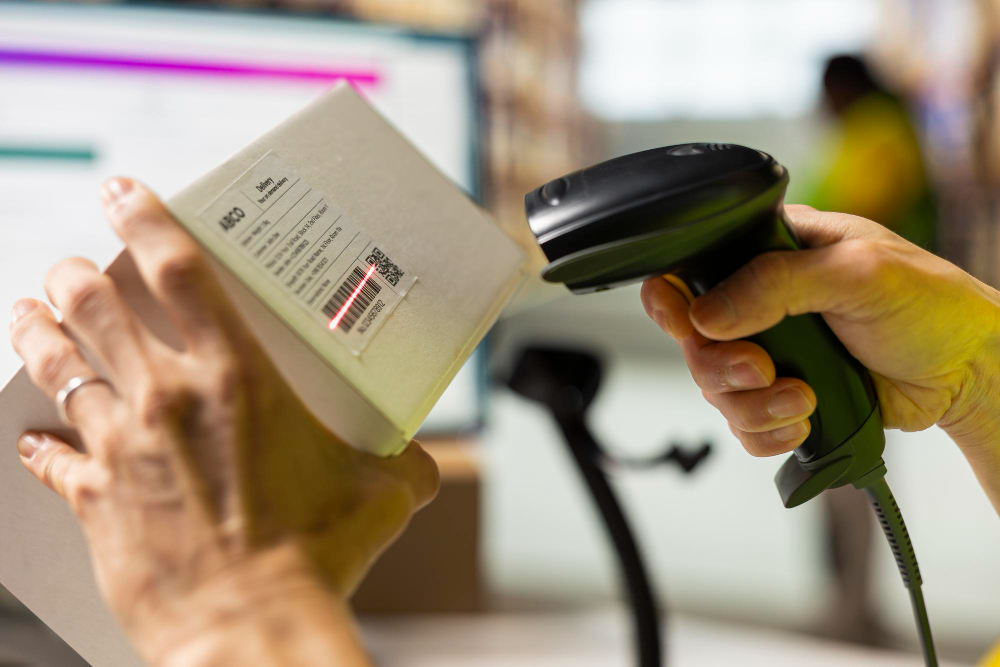
Yes. Tamper-evident solutions can be customised with serial numbers, barcodes or QR codes where traceability or authentication is required.
Should tamper labels be tested before production?
Yes. Surface texture, coating, contamination, temperature and adhesive dwell time can change performance, so testing on representative products is an important part of specification.