Hologram Sticker Sizes & Shapes: Choosing the Right Format
Published on 25 Nov 2026
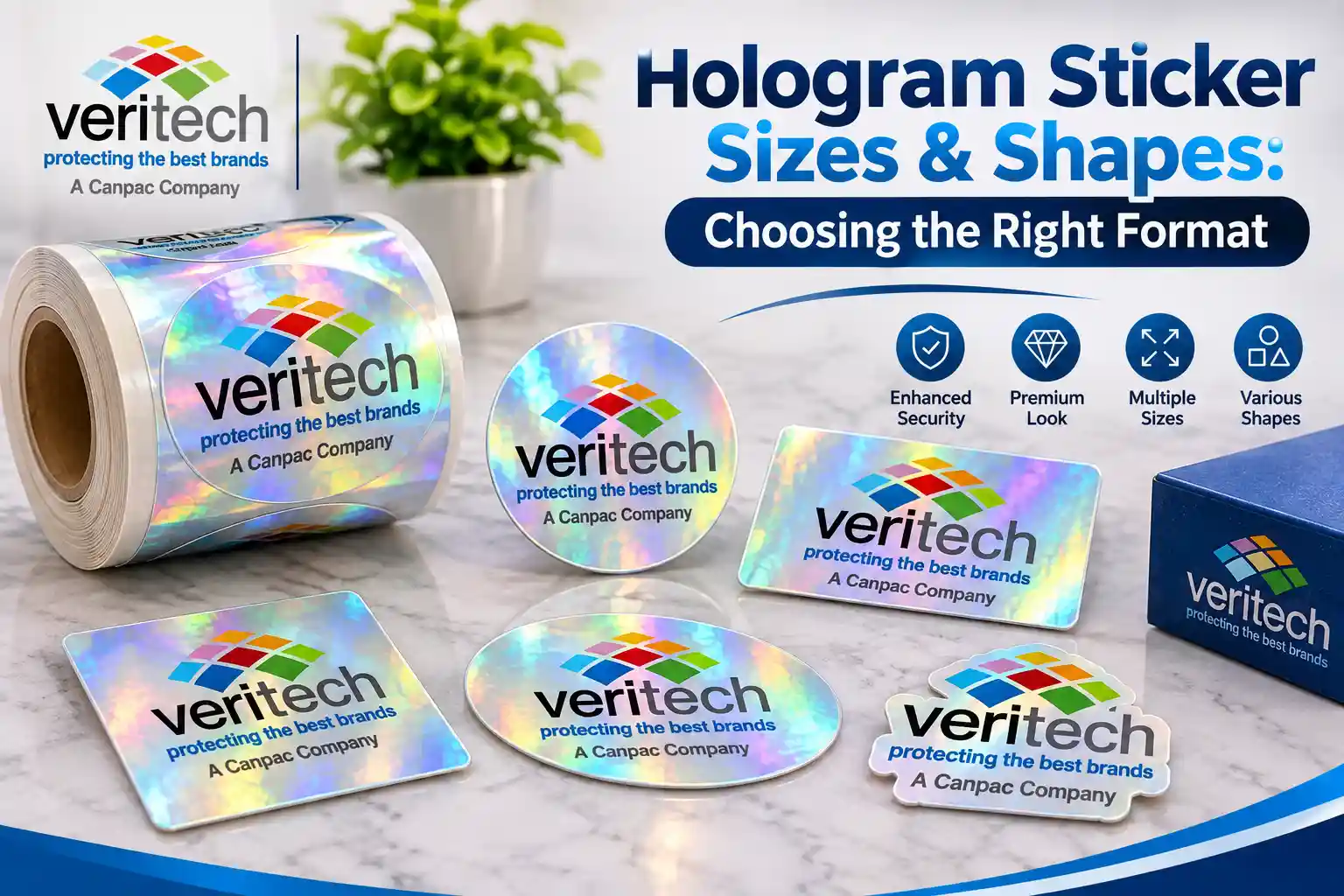
Most hologram stickers on packaging fall between 10 mm and 50 mm. Small rounds of 10 to 15 mm suit screw heads and tiny cartons. Rounds or squares of 15 to 25 mm cover most medicine, cosmetic and FMCG packs. Rectangles of around 25 × 15 mm up to 50 × 15 mm work when the sticker needs to carry a serial number or QR code, and narrow strips are used across bottle caps. The right size is the smallest one that still covers the opening, shows its effects clearly and holds any data you need to print.
There's no official standard size. That's actually good news, because it means the format can follow your pack, not the other way round. It also means plenty of brands end up guessing, ordering a size that looks fine in a mock-up and then struggling with it on the line.
Most hologram stickers on packaging fall between 10 mm and 50 mm. Small rounds of 10 to 15 mm suit screw heads and tiny cartons. Rounds or squares of 15 to 25 mm cover most medicine, cosmetic and FMCG packs. Rectangles of around 25 × 15 mm up to 50 × 15 mm work when the sticker needs to carry a serial number or QR code, and narrow strips are used across bottle caps. The right size is the smallest one that still covers the opening, shows its effects clearly and holds any data you need to print.
There’s no official standard size. That’s actually good news, because it means the format can follow your pack, not the other way round. It also means plenty of brands end up guessing, ordering a size that looks fine in a mock-up and then struggling with it on the line.
Below, we’ll go through the common sizes and where they fit, what each shape does best, how to size for security rather than looks, and the mistakes that tend to cost money later.
Common Hologram Sticker Sizes and Where They Fit
Suppliers in India list a wide range, from 10 × 10 mm all the way to 150 × 150 mm. In practice, though, most packaging orders land in a few familiar bands.
Size range
Typical shape
Where it’s usually used
10–15 mm
Round or square
Screw heads, small vials, electronics casings
15–25 mm
Round or square
Medicine cartons, cosmetics, FMCG packs
25 × 15 to 50 × 15 mm
Rectangle
Labels with a serial number or QR code
40–50 mm long, 8–10 mm wide
Strip
Over bottle caps and jar lids
50 mm and above
Rectangle or custom
Certificates, shipper boxes, premium gift packs
Treat these as starting points rather than rules. A 20 mm round that’s perfect on a cough syrup carton might look lost on a 5 litre lubricant can. And a 15 mm square that suits a mobile charger box may be far too big for a lipstick case.
What Each Shape Does Well
Round stickers are the classic choice, and there’s a practical reason for that. With no corners, they’re less likely to lift at the edges, which matters on packs that get handled a lot. They also look neat on caps and screw heads.
Squares and rectangles give you more usable area. That’s handy when the sticker has to carry a serial number, a QR code or a short line like “scan to verify”. A rectangle also bridges a carton flap nicely, with one half on the flap and the other on the body.
Strips are made for closures. A long, narrow hologram can run from a cap down onto the bottle neck, or across the seam of a shipper box, so it tears the moment someone opens it.
Then there are custom die-cut shapes, like a leaf for an ayurvedic brand or a shield for an auto-parts company. They’re more expensive to set up, since each shape needs its own cutting die, but they’re also harder to copy and easier for buyers to recognise. A counterfeiter can buy a generic round hologram off the shelf. Matching your exact shape takes a lot more effort.
What Should Actually Decide the Size
It’s tempting to pick a size based on how it looks in the artwork. A better approach is to work backwards from four practical questions:
What does it need to cover? The full width of the flap or seam, plus a few millimetres on each side for grip.
What does it need to show? Fine effects like microtext and moving images need some room to be visible.
What does it need to carry? A QR code that a phone can scan easily usually needs at least 10 to 12 mm of clear space.
What can your line apply? Automatic applicators have size limits, and very tiny labels can be slow to handle by hand.
The second question gets underrated. A 10 mm hologram can’t show much more than a shimmer. Shrink a detailed design too far and the effects buyers are supposed to check just blur together.
It also helps to bring an experienced hologram sticker manufacturer into the discussion early. They can tell you which effects survive at a given size, which adhesives suit your surface and what your applicator can handle, before you’ve spent money on artwork and dies.
Sizing Mistakes That Cost Security or Money
Going too small is the most common one. It saves a few paise per sticker, but if the hologram no longer reaches across the flap, someone can open the pack without touching it. You’ve paid for a hologram and got a decoration.
Going too big has its own problems. A large sticker on a small or curved pack tends to wrinkle and lift at the corners. Once an edge comes up, it’s far easier to peel the whole thing off cleanly, which defeats the purpose of a tamper-evident film.
Another trap is choosing a different size for every product in the range. It feels tidy at first, as each pack gets a perfectly fitted hologram. But every extra size adds its own die and setup and makes stock harder to manage. Many brands do better with two or three standard sizes that cover the whole range.
Finally, don’t forget the QR code or serial number. Squeezing a code into a sticker that’s too narrow leads to failed scans and confused customers. If you plan to add digital checks later, leave space for them now, even if you print them in a second phase.
A Quick Sizing Check Before You Order
Here’s a simple test that takes ten minutes and saves a lot of trouble. Print your shortlisted sizes on plain paper, cut them out and tape them onto real packs, exactly where the hologram will go. Then open each pack the way a customer would.
Look for three things. Does the paper tear when the pack opens? Can you read the serial number or scan the QR code with an ordinary phone? And does it look right on the shelf, from about an arm’s length away? If a size fails any of these, change it now, while it costs nothing.
Once the size is settled, think about what else the sticker should do. A hologram is strongest as one part of wider brand protection solutions, combined with a void layer, security inks or a unique code that buyers can verify.
At Canpac Veritech, we make holograms in standard and fully custom sizes and shapes, from tiny screw seals to large certificate holograms, at our facility in Greater Noida. If you’re not sure which format fits your pack, send us a sample and our team will suggest sizes that work for both security and your packing line.
Frequently Asked Questions
Q1. What is the standard size of a hologram sticker?
A. There’s no single standard. On packaging, most hologram stickers fall between 10 mm and 50 mm, with 15 to 25 mm rounds and squares being the most common for cartons and bottles.
Q2. Which shape is best for a hologram sticker?
A. It depends on the job. Rounds resist peeling, rectangles fit serial numbers and QR codes, strips suit caps and seams, and custom shapes are hardest to copy.
Q3. Can a hologram sticker be made in a custom size?
A. Yes. Most manufacturers produce custom sizes and die-cut shapes. A new shape usually needs its own cutting die, so it costs a little more upfront.
Q4. Does a bigger hologram give better security?
Not by itself. Security depends more on placement, a custom design and tamper-evident film. A hologram only needs to be big enough to cover the opening and show its effects clearly.