Security Labels vs Hologram Labels: Which to Choose?
Published on 12 Nov 2026
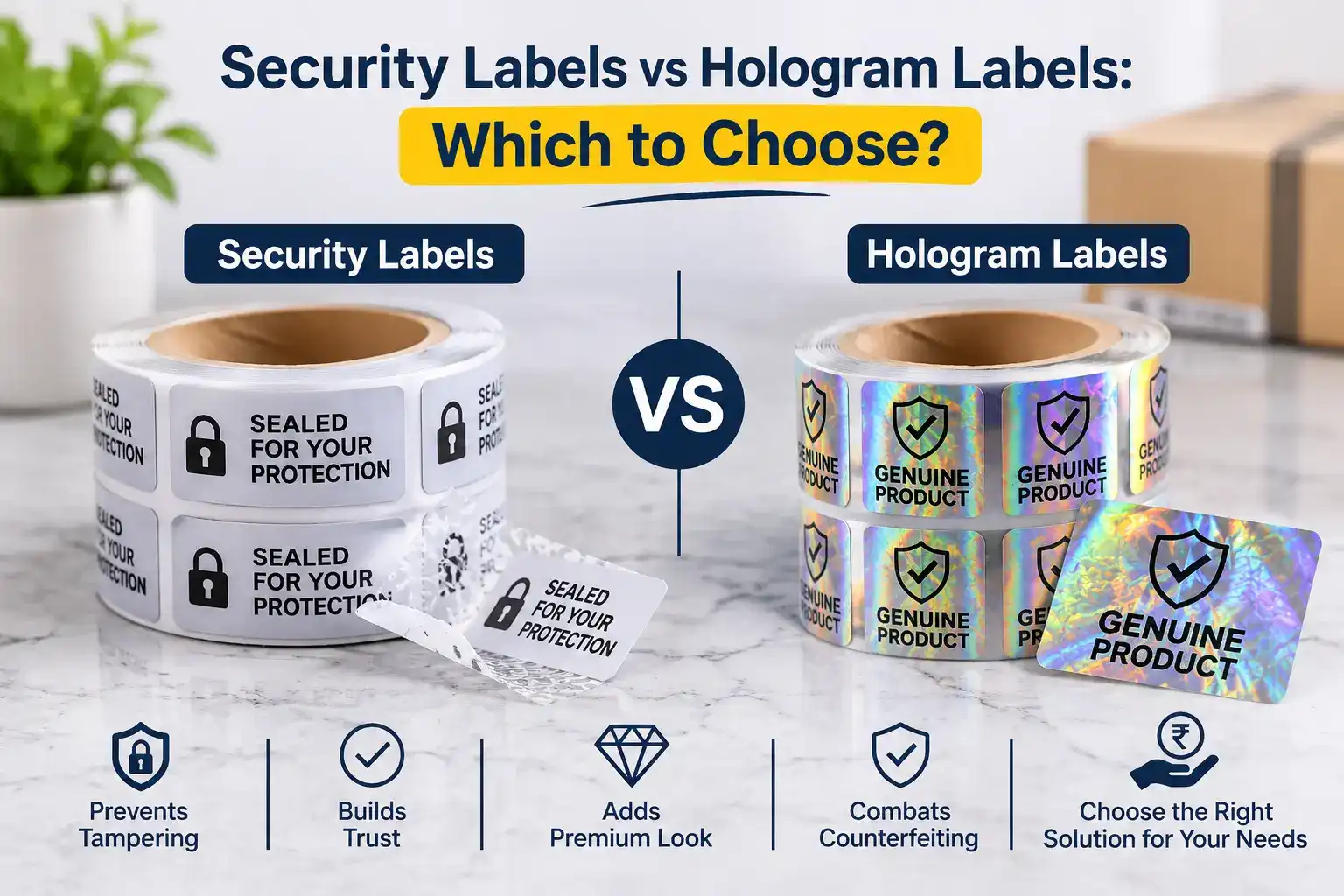
Security labels are the broad family of labels built to stop tampering and fakes. Hologram labels are one member of that family, using a light-bending image that printers can't copy. So the choice isn't really either-or. Pick a hologram label when you need a visible mark anyone can check in a second. Pick other security labels, like void, UV or serialized ones, when your main worry is tampering, hidden checks or tracking. Many brands end up using both.
That's the short answer. The longer one depends on what you're protecting, who's going to check it, and how much you want to spend per unit.
Security labels are the broad family of labels built to stop tampering and fakes. Hologram labels are one member of that family, using a light-bending image that printers can’t copy. So the choice isn’t really either-or. Pick a hologram label when you need a visible mark anyone can check in a second. Pick other security labels, like void, UV or serialized ones, when your main worry is tampering, hidden checks or tracking. Many brands end up using both.
That’s the short answer. The longer one depends on what you’re protecting, who’s going to check it, and how much you want to spend per unit.
We’ve noticed a lot of buyers walk into this question thinking they have to pick a side. Usually they don’t. Below, we’ll clear up how the two relate, put them side by side and match each one to the situations where it actually earns its place on the pack.
First, Clearing Up the Overlap
Here’s where most of the confusion comes from. Every hologram label is a security label. But not every security label has a hologram on it.
“Security label” is an umbrella term. It covers any label designed to make tampering visible or copying difficult. A plain-looking white sticker that leaves “VOID” behind when you peel it is a security label. So is one printed with ink that only shows up under UV light. Neither has a hologram.
A hologram label, on the other hand, is defined by one specific feature: an embossed diffractive image that shifts, flips or changes colour as you tilt it. That image is what makes it instantly recognisable on a shelf.
So when someone asks “security labels vs hologram labels”, what they’re usually weighing up is this. Should the main protection be a hologram that anyone can see? Or should it rely on other features, some visible and some hidden, without a hologram at all?
What Non-Holographic Security Labels Are Good At
Without a hologram, a security label leans on other tricks. The ones we see most often are:
Void and destructible labels: they leave a pattern or break into pieces when someone tries to peel them off.
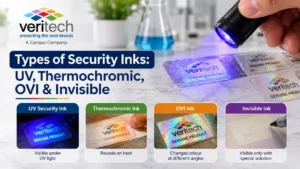
UV and invisible inks: hidden marks that only show under a UV torch.
Microtext and fine-line printing: text so small that it blurs into a line when photocopied.
Serial numbers and QR codes: a unique identity for each unit, checked against a database.
Their biggest strength is tamper evidence. If you want proof that a carton, a bottle cap or an electronics casing hasn’t been opened, a void or destructible label does that job cheaply and clearly.
They’re also great for checks your customers never see. A distributor or brand inspector with a UV torch can confirm a pack in seconds, while a counterfeiter copying the label from a photo has no idea those marks are even there.
The trade-off is visibility. A buyer in a shop won’t look at a white label and think “this is protected.” For that kind of confidence, many brands go for an anti counterfeit label that layers several of these features together, often alongside a holographic element.
What Hologram Labels Are Good At
A hologram’s big advantage is that you don’t need any tool to check it. Tilt the pack and the image moves. A buyer in a crowded chemist’s shop, a retailer at the counter, a customs officer at a port: all of them can tell something is off in a couple of seconds.
It’s also very hard to copy properly. Printers, scanners and phone cameras capture colour, not the microscopic grooves that make a hologram shift. A fake might look shiny in a photo. Hold it next to the real one, though, and it usually looks flat and lifeless.
There’s a brand side to it, too. A well-designed hologram tells the buyer, without a word, that this company takes genuineness seriously. That’s why you’ll find them on medicine strips, spirits, auto parts and premium cosmetics.
The catch is cost and lead time on a first order. A truly unique design needs a master to be originated, which is a one-time expense. Off-the-shelf patterns skip that, but anyone can buy the same one. That’s why serious brands go for custom hologram stickers made only for them, as opposed to a stock rainbow seal.
Security Labels vs Hologram Labels Side by Side
This table compares a hologram label with security labels that don’t carry a hologram.
Non-holographic security labels
Hologram labels
Main strength
Shows tampering, supports hidden checks
Instant visual proof of a genuine product
Who can check it
Mostly trained staff with a tool, plus buyers for void marks
Anyone, with no tool at all
Hard to copy?
Depends on the features used
Very hard, especially with a custom design
Upfront cost
Low, no master needed
Higher on the first order, lower on reorders
Shelf presence
Plain, often unnoticed
Eye-catching, signals a premium brand
Best for
Seals, cartons, electronics, asset tags
Pharma, spirits, auto parts, cosmetics, documents
The table makes one thing pretty clear. Each type is strong exactly where the other is weaker, which is the main reason the two so often end up on the same label.
Which One Fits Your Situation?
Don’t start with the label. Start with the problem. What’s actually going wrong right now, or what keeps you up at night?
Say lookalike fakes are eating into your sales. Then a hologram should be your first line of defence. Buyers can tell real from fake without any help, and plenty of small-time counterfeiters won’t even bother trying.
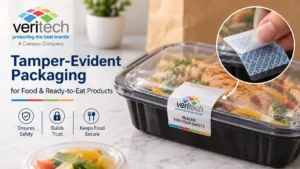
Maybe the trouble is different. People open packs, refill them or swap out parts. Here a tamper-evident label does more. To a hologram, a refilled cooking oil bottle or a laptop with replaced parts still looks genuine. A broken void seal gives the game away.
Perhaps the checks you care about happen inside your own network, by distributors, auditors or your field staff. Covert marks and serial codes handle that quietly, and they don’t cost much.
High-value product? Copied a lot? Regulated? Then expect to need a mix. A pharma pack shows how it works: one label carries a hologram for the buyer, a void layer against tampering and a QR code for tracking.
Why Many Brands End Up Using Both
Most counterfeiters crack security one feature at a time. Put just one barrier in their way and eventually somebody figures it out. Put three or four, each checked by someone different, and faking the full label just isn’t worth their time anymore.
Layered labels typically protect on three levels:
Overt: a hologram any shopper can check with a quick tilt.
Covert: UV marks or microtext that distributors and inspectors look for.
Digital: a unique code, matched against a database.
Build it on a void or destructible base and tamper evidence comes along too. Still just one label.
Labels like this are our everyday work at Canpac Veritech. We make our holograms in-house, then pair them with void layers, security inks and serialized codes. The label is shaped around your product, not your product around the label. Can’t decide on the right mix? Send us a sample pack, and our team will recommend where to begin.
Frequently Asked Questions
Q1. What is the difference between security labels and hologram labels?
A. Security labels are the whole group of labels made to show tampering or prevent copying. Hologram labels belong to that group, but they rely on a light-bending image that buyers can check just by tilting the pack.
Q2. Are hologram labels more secure than other security labels?
A. For visual checks, usually yes, because a custom hologram is very hard to copy. Against tampering, a void or destructible label often works better. Combining both gives the strongest result.
Q3. Are hologram labels expensive?
A. The first order costs more, since a custom master has to be made. After that, reorders are much cheaper, and the per-label price drops as your volume goes up.
Q4. Can one label have a hologram and other security features?
A. Yes. Many labels combine a hologram with a void layer, UV ink, microtext and a QR code, so different people can check different features.