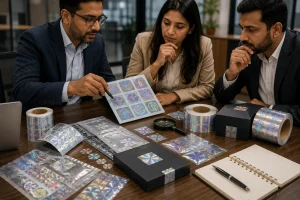
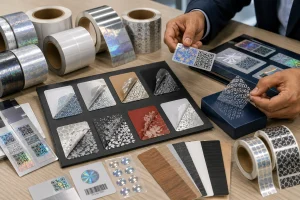
Tamper-evident holograms are a kind of security stickers which physically shows any unauthorized removal attempt through visible damage. This makes them a favourite option for safeguarding high-value packaging in sectors such as pharmaceuticals and FMCG. These labels aren't your classic shiny ones; they use a combination of optical trickery and destructible materials to secure against counterfeiting and tampering.
Core Definition and Purpose
Tamper-evident holograms are a kind of security stickers which physically shows any unauthorized removal attempt through visible damage. This makes them a favourite option for safeguarding high-value packaging in sectors such as pharmaceuticals and FMCG. These labels aren’t your classic shiny ones; they use a combination of optical trickery and destructible materials to secure against counterfeiting and tampering.
Core Definition and Purpose
A tamper-evident hologram is basically a holographic sticker that is designed in such a way that it either self-destructs or makes a VERY clear mark, like “VOID, ” honeycomb structures, or sticky residue when it is peeled off. Thus, it becomes clear proof of tampering, and it can be detected even without a device. Brands install these features to stand against counterfeits and confirm the authenticity of their products in sectors like pharmaceuticals or electronics, where the consumer’s trust is paramount.
Besides that, tamper-evident holograms differ from a standard hologram in that they contain single-use glue or films that fracture the pattern on removal, thus making it impossible to transfer to counterfeit goods. They are the perfect type of seals for bottles, boxes, or papers to give users an instant indication of a compromised product.
How Holograms Create the Magic.
Holograms basically originate from the use of lasers, which are employed to etch the interference patterns into thin foil, creating 3D images with color shifts, kinetic effects, and microtext only visible under light or magnification. The tamper-evident ones are those that normally use PET or paper substrates that are deliberately made to delaminate as a second layer of hologram.
The main features are: Destructible adhesives:
These are so strong that they bond the surfaces together, and therefore, the peeling itself causes the surface to break apart.
Key mechanisms include:
Destructible adhesives:
They bond their surface so firmly that when you peel them off, the foil gets fractured, and pieces or patterns remain.
Special patterns:
The VOID material hides the letters; the honeycomb or checkerboard grids break up into visible randomness.
Security extras:
Embedded serials, UV features, or irregular cuts are some of the ways to prevent replication.
Step, by, Step: Detection in Action
The first step is as easy as putting one over the seal or the critical area. This is how tampering can be detected:
Original check: Turn it in the light to see rainbow shadows or a hidden picture that serves as authenticity.
Tamper attempt: When peeling, the destruction is inevitable, and smooth dislodgement is impossible.
Proof revealed: The base shows “VOID, ” dots, or residues; the hologram disintegrates. This offline verification is superior to digital ones in areas that are rural or without a signal, with destruction rates near 100% for professionals
Hologram Types Compared
Type
Material
Tamper Effect
Best For
PET Foil
Strong film
Residue or full VOID
Durable seals (pharma)
Paper-Based
Fragile
Image destruction, no residue
Documents, light packs
Custom Logo
Branded
Pattern + brand mark
Luxury branding
Real-World Wins and Limits
Indian firms like those in holography packaging (think competitors to Canpac) deploy these on textile and agro products, cutting fakes by revealing tampering instantly. Limits? Cost ($0.05+ per unit) and training for spot-checks—pair with QR for hybrids.
In short, tamper-evident hologramsdeliver visible trust through smart destruction, evolving the anti-counterfeit game for secure supply chains. Got packaging tamper woes? Test a sample run.