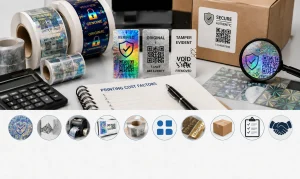


Anti-counterfeiting technologies in pharma help manufacturers, distributors and regulators prevent, detect and investigate falsified medical products. These technologies protect more than packaging. They connect a medicine pack with a controlled identity, show whether the pack has been opened, record how it moved through the supply chain and give authorised users a way to verify it.
The strongest programmes do not depend on one label, code or database. They combine secure packaging, unique product identities, digital authentication, supply-chain traceability, controlled production and clear response procedures. Each layer solves a different part of the problem.
Anti-counterfeiting technologies in pharma help manufacturers, distributors and regulators prevent, detect and investigate falsified medical products. These technologies protect more than packaging. They connect a medicine pack with a controlled identity, show whether the pack has been opened, record how it moved through the supply chain and give authorised users a way to verify it.
The strongest programmes do not depend on one label, code or database. They combine secure packaging, unique product identities, digital authentication, supply-chain traceability, controlled production and clear response procedures. Each layer solves a different part of the problem.
This matters because counterfeit medicines are not only a commercial risk. A falsified product may contain the wrong ingredient, the wrong dose, no active ingredient or an undeclared substance. It may delay effective treatment and reduce trust in healthcare systems. The World Health Organization has estimated that more than one in ten medicines in low- and middle-income countries may be substandard or falsified, which shows why pharmaceutical authentication needs both physical and digital controls.
Anti-counterfeiting refers to the technologies, processes and controls used to make unauthorised products harder to manufacture, distribute or present as genuine. In the pharmaceutical industry, these measures help verify product identity, reveal packaging interference, detect duplicated codes, trace product movement and investigate suspicious stock.
A complete anti-counterfeiting programme may use physical features such as holograms and security inks, digital tools such as serialization and QR authentication, operational controls for suppliers and packaging materials, and legal or regulatory action when falsification is confirmed.
No single technology can guarantee that a medicine will never be copied. The practical goal is to increase the effort and cost required to produce a convincing fake while making suspicious products easier to identify, isolate and investigate.
The terms counterfeit, falsified and substandard are often used together, but they do not describe the same problem.
A falsified medical product deliberately misrepresents its identity, composition or source. It may show the name of a fake manufacturer, contain incorrect ingredients, carry the wrong strength, use copied packaging or display altered batch information. A falsified pack may also use a duplicated medicine authentication code or a copied serial number to appear legitimate.
A substandard medicine is different. It is an authorised product that fails to meet the required quality standards or specifications. This may happen because of problems in manufacturing, storage, transport or quality control, without an intention to deceive.
Anti-counterfeiting systems mainly address deliberate falsification, substitution and unauthorised distribution. Quality-management systems are still needed to identify genuine products that fail to meet specification.
Pharmaceutical products are particularly vulnerable because they may be valuable, widely distributed and difficult for consumers to assess. A carton can look professional while the medicine inside is ineffective or unsafe. Visual similarity is not proof of authenticity.
Falsified medicines can enter the market through unauthorised manufacturers, unapproved suppliers, compromised distributors, stolen shipments, returns fraud, reused packaging, unlicensed online pharmacies and diversion from the intended market. Product substitution may also happen during transport, while copied serial numbers and QR codes can make unauthorised packs look legitimate during a basic check.
The damage extends beyond lost sales. Pharmaceutical companies may face patient-safety concerns, higher complaint volumes, expensive investigations, recalls, regulatory scrutiny and long-term loss of confidence. A strong strategy must therefore protect both the physical package and the digital identity assigned to it.
Pharmaceutical security features are commonly grouped into overt, covert and forensic levels. These levels are designed for different users and should support one another.
Overt features can be checked without specialist equipment. A consumer, pharmacist or distributor may inspect a security hologram, colour-changing element, custom optical effect, visible serial number or tamper-evident seal. These features support a quick first check and can also help users recognise the expected packaging.
Because overt features are visible, counterfeiters can study them. A customised design is harder to imitate than a generic feature, but overt security should still be supported by hidden or digital verification.
Covert features are hidden or require a simple tool to examine. They may include ultraviolet inks, infrared-responsive elements, microtext, hidden images, taggants or machine-readable patterns. These features are mainly used by authorised distributors, field teams and investigators who know what to check and how to verify the response.
Covert security is most useful when access to the verification method is controlled. Publicly revealing every hidden feature weakens its value.
Forensic features require laboratory equipment or specialist examination. Molecular markers, proprietary chemical taggants, microscopic structures, nano-scale identifiers and material-specific signatures may support formal investigations or enforcement action.
A well-designed packaging system may use all three levels. Consumers can check an overt feature, trained teams can inspect a covert element and investigators can use a forensic marker when stronger evidence is required.
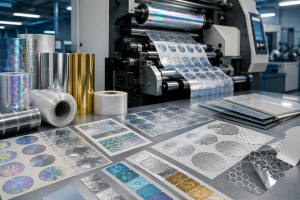
A customised security hologram creates optical effects that ordinary printing equipment cannot reproduce accurately. The design may combine multiple visual planes, kinetic movement, microtext, hidden images, demetallised areas, serial numbers, QR-code integration and tamper-evident materials.
The hologram should be designed for the brand and product rather than selected from a generic pattern. A recognisable, brand-specific feature gives pharmacists, distributors and consumers a clearer reference during visual inspection.
Veritech’s secure hologram solutions can combine visible authentication with covert and tamper-evident features. A hologram does not confirm the chemical composition of a medicine, so it should support, rather than replace, quality controls, serialization and digital verification.
Security printing adds details that are difficult to copy with standard scanners and printers. Depending on the verification process, a label or carton may use UV-fluorescent ink, infrared-responsive ink, thermochromic or photochromic ink, colour-shifting effects, microtext, fine-line patterns, anti-scan backgrounds or hidden images.
Different features serve different users. A consumer may recognise a visible colour change, while an authorised inspector may use UV light or a compatible reader to check a covert response. The selection should depend on who will verify the pack and what equipment they can access.
Veritech’s high-security printing solutions can be used for authentication labels, pharmaceutical packaging and protected documents. Every feature should be tested on the actual substrate because coatings, temperature, production speed and packaging material can affect performance.
Tamper-evident packaging provides visible evidence when someone attempts to open, remove, replace or reuse a pack. Common options include VOID labels, destructible labels, frangible seals, transfer materials, tamper-evident tapes, breakable closure seals and holographic tamper labels.
These formats are especially useful for bottles, cartons, vials and secondary packaging that could otherwise be opened and resealed. The design should match the surface and the type of interference the brand needs to reveal.
Tamper-evident does not mean tamper-proof. A seal cannot make interference impossible. Its purpose is to make opening, removal or transfer easier to notice. Veritech’s tamper-evident seal solutions can be developed for different pharmaceutical surfaces and closure systems.
Serialization assigns a unique identity to an individual medicine pack or another defined packaging unit. The identifier may appear as a data matrix, QR code, barcode, alphanumeric serial number, RFID identity or NFC identity.
The serial record can connect the pack to its product name, pack size, batch number, manufacturing date, expiry date, production facility, destination market and distribution status. This helps distinguish one pack from another and supports duplicate-code detection, recalls and distribution investigations.
Printing a unique number is only the first step. The system must control how codes are generated, activated, applied, rejected and deactivated. Unused or damaged serialized labels should be reconciled and destroyed or disabled so they cannot be used on unauthorised packaging.
A serialized QR code can give pharmacists, distributors and consumers access to a product verification page. When scanned, the system may check whether the identity exists, whether it belongs to the correct medicine, whether it has been activated, whether it has been scanned before and whether the batch has expired, been recalled or shown unusual activity.
An ordinary QR code that sends every user to the same webpage does not authenticate an individual pack. The image can be copied easily. A stronger approach uses a unique, unpredictable identity connected to a secure database.
The verification response must also be clear. A message such as “Thank you for scanning” does not confirm that the medicine was authenticated. The page should tell the user whether the code is valid, invalid, previously scanned or under review and explain what to do next.
Veritech’s product authentication and verification solution can connect medicine packaging with controlled digital records.
Pharmaceutical track and trace records selected events as a product moves from production through distribution. Tracking shows the latest recorded status of the medicine, while tracing reconstructs where it came from and which parties handled it.
A track-and-trace record may include code generation, packaging, aggregation, dispatch, warehouse receipt, distributor transfer, retail receipt, authentication, return, recall and disposal. This history can help teams identify duplicate identities, unexplained movement and stock appearing outside an authorised route.
A track-and-trace solution does not automatically prove that the contents of a pack are genuine. It works only when the product identity is secure, events are captured reliably and supply-chain data is accurate.
Radio-frequency identification and near-field communication can support faster identification and authentication. RFID can read several tagged items without a direct line of sight, which may help with inventory monitoring, shipment verification, cold-chain tracking and return management. NFC supports short-range smartphone interaction and can be used for product verification or access to controlled information.
These technologies usually cost more than printed codes, so they are often better suited to high-value medicines, specialised shipments or reusable assets. Privacy depends on how the system is designed. A product-level tag does not automatically contain patient information, and brands should avoid collecting personal data unless it is necessary and properly protected.
Blockchain can create a shared, append-only record of selected supply-chain transactions. It may be useful when several independent organisations need access to a common record and do not want the system to depend entirely on one party’s database.
However, blockchain does not prove that the physical medicine is genuine, prevent a packaging code from being copied or confirm that the information entered was correct. It also cannot show that a product was stored properly unless reliable data was captured and added to the system.
For many pharmaceutical programmes, a securely governed central database may be simpler and more cost-effective. Brands comparing the available approaches can review Veritech’s guide to holograms, NFC and blockchain.
| Security layer | Example technology | Main purpose |
| Visual authentication | Secure hologram | Supports quick verification without equipment |
| Hidden authentication | UV ink or microtext | Supports controlled distributor and inspector checks |
| Packaging protection | Tamper-evident seal | Reveals opening or label transfer |
| Unique identity | Serialized label | Distinguishes individual packs |
| Digital verification | QR authentication | Checks identity against a database |
| Supply-chain visibility | Track and trace | Records product movement |
| Automated identification | RFID or NFC | Supports rapid scanning and verification |
| Investigation | Forensic marker | Provides specialist confirmation |
The right combination depends on the medicine, package format, threat level, market and intended verification users. A low-risk over-the-counter product may not need the same controls as a high-value oncology medicine, injectable product or temperature-sensitive shipment.
The aim is not to add every available feature. It is to select technologies that address different risks without making verification too complex for the people expected to use them.
Technology is only one part of an anti-counterfeiting programme. The surrounding controls determine whether the technology remains secure and useful.
Security labels, printed cartons, hologram masters and serial-number files must be controlled and reconciled. Unused, damaged and rejected materials should be returned, deactivated or destroyed through a documented process. Without these controls, genuine security materials may enter unauthorised channels.
Pharmaceutical brands should assess component suppliers, contract manufacturers, packaging vendors and logistics partners before placing sensitive materials or data in their control. The review should cover site security, data access, subcontracting, waste handling, employee permissions and production reconciliation.
Pharmacists, distributors and consumers need simple instructions that explain where the security feature appears, how it should behave, how to scan or verify it, what a valid result means and what action to take when the result is suspicious. Covert and forensic features should remain restricted to authorised users.
A suspicious scan, damaged seal or duplicated code should trigger a defined investigation. The response may involve quarantining the product, checking production records, reviewing scan and shipment data, contacting the authorised distributor, inspecting physical security features, arranging laboratory analysis and reporting confirmed cases to regulators.
An authentication system creates value only when teams know how to respond to the alerts it produces.
Serialization, labelling and data-reporting requirements differ by country. Brands should design their systems around the markets they serve rather than assuming one global workflow will meet every requirement. A common technical framework may still be used, but local rules and reporting processes must be built into the implementation.
Serialization, variable-data printing, vision inspection, software integration and field verification require investment. Smaller manufacturers may need to introduce the system in stages, starting with products or markets that carry the highest patient, commercial or regulatory risk.
Authentication platforms may need to connect with enterprise resource planning, manufacturing execution, warehouse, packaging-line, distributor and regulatory systems. Poor integration can create duplicate work, incomplete records or inconsistent product status. Data ownership and system responsibilities should be defined before implementation.
Falsified medicines often move across borders, while enforcement powers remain country-specific. Effective action may require cooperation between manufacturers, distributors, regulators, customs authorities, law-enforcement agencies, online platforms and healthcare organisations.
Authentication databases may contain sensitive production and distribution information. Brands should use role-based access, encryption, secure interfaces, audit logs, backups and clear retention policies. Consumer-facing verification should not collect unnecessary personal or health information.
Even a technically strong QR authentication system has limited value when users do not understand why or how to scan it. The package should include a short instruction and direct users to a recognisable, brand-owned verification experience that works quickly on mobile devices.
A copied genuine code may produce a valid result during its first unauthorised use. This is why digital authentication should not operate alone. Duplicate-scan monitoring, tamper evidence, holograms, covert features and distribution records provide the context needed to judge whether a scan is suspicious.
Pharmaceutical anti-counterfeiting is moving towards connected packaging that combines physical protection with a controlled digital identity. Serialized codes, NFC tags and sensors can connect a medicine pack with authentication, recall, handling and storage information.
Analytics will also play a larger role. Systems can already flag duplicate-code clusters, unusual scan locations, excessive verification attempts, codes scanned before dispatch and products appearing outside authorised markets. These alerts help investigation teams focus their work, but human review is still needed before a product is classified as counterfeit.
Physical and digital security will become more closely integrated. Instead of treating a secure label, tamper-evident material and digital platform as separate projects, brands will design them as one verification journey. Mobile devices and portable readers will make this process more accessible to pharmacists, distributors and field inspectors.
Data governance will become equally important. As products become more connected, companies will need tighter control over who can generate, print, activate, deactivate and access product identities.
The industry is also moving towards risk-based design. Applying the same label to every medicine is rarely the best use of resources. Future programmes will consider patient risk, product value, market exposure, distribution complexity, package type and the history of falsification before selecting the security layers.
Veritech develops physical and digital solutions for pharmaceutical product authentication, tamper evidence and supply-chain visibility. Depending on the medicine and its risk profile, the solution may combine custom security holograms, secure pharma labels, security inks, tamper-evident seals, serialized labels, security barcode labels, QR-code authentication, variable-data printing, product verification, track-and-trace integration and covert or forensic features.
Brands can explore Veritech’s medical and healthcare solutions or review the guide to choosing an anti-counterfeit label for pharmaceutical products.
The most appropriate solution should be selected after reviewing the medicine, packaging material, production process, distribution model, threat level and intended verification users. A layered system should make verification easier for authorised users without adding unnecessary complexity to the manufacturing or supply-chain process.
It is the use of physical, digital, operational and legal controls to prevent, detect and investigate falsified medicines and packaging. These controls may protect the package, verify the product identity or record movement through the supply chain.
Common technologies include security holograms, security inks, tamper-evident seals, serialization, QR-code authentication, RFID, NFC and pharmaceutical track-and-trace systems. Higher-risk medicines may also use covert or forensic features.
No. Serialization gives each product or pack a unique identity. Authentication checks whether that identity is valid and connected to the expected product record.
An ordinary QR code cannot prove authenticity. A unique code connected to a secure database can support verification, but copied codes and physical product substitution are still possible. QR authentication works best when combined with monitoring and physical security.
Customised holograms provide useful visual authentication and are harder to reproduce than ordinary printed labels. Their value increases when they are combined with covert features, serialization, tamper evidence and digital verification.
Tamper-evident packaging provides visible signs when a seal, label, carton or closure has been opened, removed or interfered with. It does not make tampering impossible, but it makes interference easier to identify.