The electronics market in India has grown fast—smartphones, chargers, circuit components, industrial parts, and everything in between. But along with growth comes a serious problem that many brands don’t talk about openly: counterfeit components quietly entering the supply chain.
Unlike fake fashion or duplicate accessories, counterfeit electronics aren’t just a brand issue—they can fail, overheat, or even become safety hazards. That’s why more companies are turning to security hologram labels as a practical way to protect both their products and their reputation.
Why Electronics Need Strong Authentication
The electronics market in India has grown fast—smartphones, chargers, circuit components, industrial parts, and everything in between. But along with growth comes a serious problem that many brands don’t talk about openly: counterfeit components quietly entering the supply chain.
Unlike fake fashion or duplicate accessories, counterfeit electronics aren’t just a brand issue—they can fail, overheat, or even become safety hazards. That’s why more companies are turning to security hologram labels as a practical way to protect both their products and their reputation.
Why Electronics Need Strong Authentication
Electronic products pass through multiple hands before reaching the end user—manufacturers, distributors, retailers, and sometimes service centers. Each stage creates an opportunity for duplication or part replacement.
A fake cable might look identical. A duplicate chip might carry the same marking. But performance tells a different story—and by then, the damage is already done.
Security hologram labels act as a visible checkpoint. They make it easier to verify whether a product is genuine before it’s used or sold.
What Makes Hologram Labels Effective
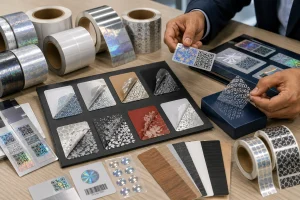
Hologram labels are not just shiny stickers. They are built using laser-based imaging that creates multi-dimensional optical effects, which are extremely difficult to copy using standard printing methods.
These labels often include a mix of features like:
- 2D/3D visual depth
- Microtext and hidden elements
- Serial numbers or QR codes
- Tamper-evident layers
The combination of these elements makes duplication both technically complex and economically unviable.
Tamper Evidence: A Critical Advantage
In electronics, tampering is just as risky as counterfeiting. Components are sometimes replaced with low-quality substitutes and resold as original.
Tamper-evident hologram labels are designed to reveal this instantly. If someone tries to remove them, they either break, leave a residue, or display a warning like “VOID.”
This means:
- A broken seal signals interference
- The label cannot be reused
- End users and technicians can identify issues quickly
For warranty protection and service validation, this becomes especially useful.
Common Applications in Electronics
Security hologram labels are widely used across different types of electronic products and components:
- Mobile phones and accessories
- Laptop and battery packaging
- Printed circuit boards (PCBs)
- Automotive electronic parts
- Industrial control systems
- Warranty seals on devices
In many cases, these labels are placed on screws, openings, or critical joints—areas where tampering would occur first.
Layered Security: Beyond Just a Label
Modern solutions in India are moving beyond basic holograms. Companies are combining physical labels with digital systems.
Some advanced implementations include:
- QR-based product verification
- Track-and-trace systems
- Unique serialisation for each unit
This hybrid approach strengthens supply chain visibility and makes it easier to track where a counterfeit might have entered the system.
Building Consumer and Dealer Trust
In electronics, trust is everything. A single faulty product can lead to returns, bad reviews, and lost customers.
When a product carries a high-quality security hologram, it sends a clear signal: the brand takes authenticity seriously.
Distributors and retailers also feel more confident dealing with products that have visible security features. It reduces disputes and simplifies verification at every level.
The Indian Market Shift
India’s manufacturing and electronics sectors are becoming more organized and quality-focused. With initiatives like “Make in India” and increasing exports, the need for product authentication has grown stronger.
Security hologram labels are no longer limited to high-end brands. Even mid-sized manufacturers are adopting them as a standard practice to prevent losses and maintain credibility.
Choosing the Right Approach
Not all hologram labels offer the same level of protection. For electronics and components, it’s important to focus on:
- Strong adhesive and durability
- Clear tamper-evident behavior
- Custom design elements
- Integration with digital authentication (if needed)
A well-designed label doesn’t just sit on the product—it actively protects it.