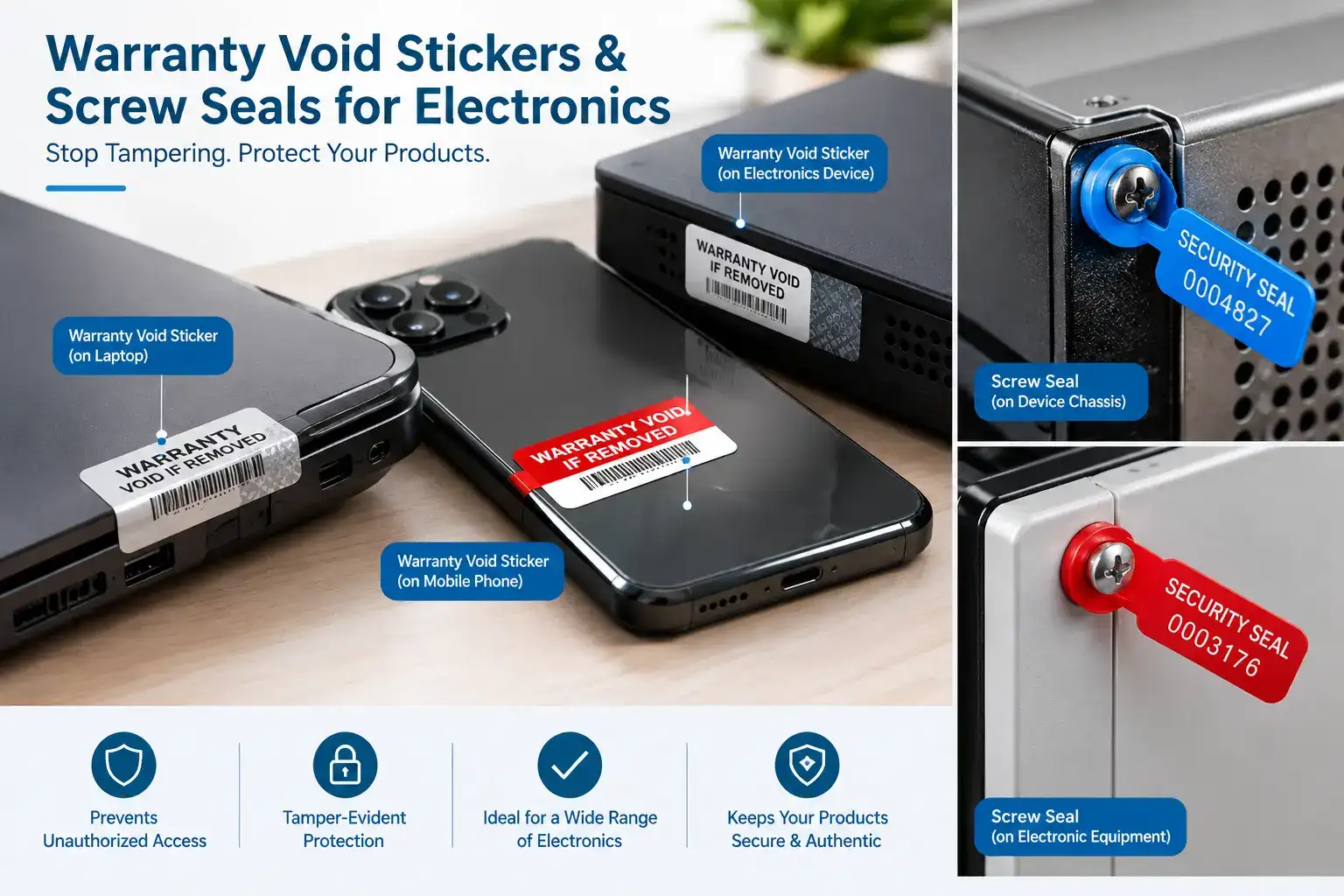
A warranty void sticker is a tamper-evident label that shows, at a glance, whether a device has been opened. Peel it or cut it and it either breaks apart or leaves a "VOID" pattern behind. Screw seals do the same job in a smaller size, sitting right on top of the screws that hold a casing shut.
Flip over a laptop or a set-top box and you'll probably spot one. Tiny, easy to miss. Still, they fix a real headache for electronics brands. When a product comes back under warranty, the service team needs to know if someone's been inside it, and a broken seal answers that in about two seconds.
A warranty void sticker is a tamper-evident label that shows, at a glance, whether a device has been opened. Peel it or cut it and it either breaks apart or leaves a “VOID” pattern behind. Screw seals do the same job in a smaller size, sitting right on top of the screws that hold a casing shut.
Flip over a laptop or a set-top box and you’ll probably spot one. Tiny, easy to miss. Still, they fix a real headache for electronics brands. When a product comes back under warranty, the service team needs to know if someone’s been inside it, and a broken seal answers that in about two seconds.
They have limits, though, and in some markets the law has caught up with how they’re worded. Below, we cover how these stickers work, which type suits which device, where to put them, and how to use them without landing in trouble.
How a Warranty Void Sticker Actually Works
The trick is in the layers. A normal label is made to stick and stay in one piece. A void label is made so its layers split apart the moment someone tries to lift it.
Most of them use a special film with a hidden pattern between the face and the adhesive. As the label is peeled, some of the adhesive stays on the device and some comes away with the face. Whatever’s left on the surface reads “VOID”, “OPENED” or a pattern of your choice. Press the label back down and the message still shows through, so nobody can quietly put it back.
Other labels skip the pattern and just break. These are made from destructible material so thin and brittle that it tears into bits as soon as a fingernail gets under the edge. Either way, you end up in the same place. It can’t come off without leaving proof.
Heat is the usual way people try to beat these labels. A hair dryer can soften some adhesives enough to lift them clean. Many better-quality void labels are designed to show tampering even with heat or solvents, so it’s worth asking about that before you place a bulk order.
Screw Seals: Small Label, Big Job
Screw seals, sometimes called screw labels or screw-hole stickers, are usually round and often less than a centimetre across. Each one sits over a single screw head. Some cover the hole completely, while others are domed so they hug the screw.
Why add them when there’s already a void sticker on the box? Because a casing can be opened without ever touching the outer label. The screws are how a technician, or a reseller swapping out parts, really gets in. Put a seal on the right screw and nobody can turn it without tearing the label.
You’ll find them on all sorts of gear, like:
- Laptops and tablets
- Routers and set-top boxes
- Power banks and chargers
- CCTV cameras
- Gaming hardware
They’re cheap, quick to apply on the assembly line, and next to impossible to replace neatly once broken.
Types and Materials Worth Knowing
Not every void sticker suits every product. Here are the main options, and where each one tends to work best:
- Residue void labels: leave a VOID or custom pattern on the surface. Good for smooth plastic and metal casings.
- Non-residue void labels: show the message on the label but leave the surface clean, handy for products that get refurbished and resold.
- Destructible vinyl labels: shred into pieces when lifted. A favourite for screw seals and tight corners.
- Holographic void labels: add a hologram layer, which makes the seal itself hard to fake.
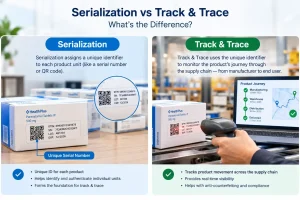
- Serialized void labels: carry a unique number or QR code linked to a warranty record.
Those last two deserve a closer look. A plain void sticker proves a device was opened. What it can’t prove is that the sticker is genuine. Somebody can order a cheap lookalike online, slap it on after an unauthorised repair, and nobody’s any the wiser. A hologram or a unique code shuts that door, and once every label carries its own code, tools like our Digital Solutions can check it with a single scan.
Where to Place Them on a Device
Placement is where a lot of brands slip up. A seal in the wrong spot is basically decoration. Some rules of thumb we’d stick to:
- Seal the screws or seams that actually open the device, not parts people remove in normal use, like a battery cover or SIM tray.
- Cover the entry point fully, so the case can’t be prised open around the edge of the label.
- Avoid textured plastic, sharp curves and spots that get hot, such as near a charging port.
- Keep the seal where a service engineer can see it without unscrewing something else first.
One more thing. Always test on the real casing, not on a sample card from the supplier. Adhesives that grip perfectly on a flat test sheet can behave very differently on a slightly curved, slightly oily plastic shell fresh off the moulding line.
The Legal Side: What These Stickers Can and Can’t Do
This part catches out a lot of brands, so let’s be clear about it.
In the United States, the Federal Trade Commission considers “warranty void if removed” stickers illegal in most cases. Back in April 2018, it sent warning letters to six companies selling cars, mobile devices and gaming consoles, citing the Magnuson-Moss Warranty Act. Under that law, a company generally can’t make warranty cover dependent on using its own parts or service, unless it provides them free or gets a waiver.
India doesn’t have a matching rule aimed at these stickers, at least not yet. The direction looks similar, though. The Department of Consumer Affairs runs a Right to Repair portal covering mobiles and electronics, consumer durables, automobiles and farm equipment, and the overall push is towards giving buyers more repair options.
So what should you actually do? A few practical pointers:
- Treat a broken seal as evidence for your service team, not as an automatic “claim rejected”.
- Prefer wording like “tamper evident” or “do not remove” over “warranty void if removed”, especially if you export.
- Have your legal team sign off on the exact text before you print a single roll.
Pairing Physical Seals With a Digital Warranty
A void sticker tells you what happened to the device. It can’t tell you when it was sold, who sold it, or whether the warranty’s even valid. For that, plenty of brands still lean on paper bills and stamped cards, which get lost, faked or filled in after the fact.
Linking the seal to a digital record fixes most of this. Print a unique QR code on the label and the customer scans it to register the product on the day they buy it. When a claim comes in, your service centre scans the same code and instantly sees:
- The purchase date and the dealer who sold it
- Every past repair or replacement
- Whether the seal was registered intact
Fake claims drop, and genuine customers get served faster. That’s really the idea behind good Warranty management: the label on the device and the record in the system tell the same story.
At Canpac Veritech, we make void labels, screw seals and holographic tamper-evident labels, and we can serialize them for your whole product line. Those codes then power warranty registration, product authentication and service tracking, all from one scan. Planning seals for a new device, or tired of chasing fake claims? Have a chat with our team.
Frequently Asked Questions
What is a warranty void sticker?
It’s a tamper-evident label that breaks apart or leaves a “VOID” message when someone tries to peel it off. That way, you can tell straight away if a product has been opened.
Are “warranty void if removed” stickers legal?
In the US, the FTC treats them as illegal in most cases under the Magnuson-Moss Warranty Act. India has no specific ban on them right now, but brands should word them carefully and get legal advice before printing.
What is a screw seal sticker?
A small, round tamper-evident label that sits over a screw head. If anyone turns the screw, the label tears, so you know the casing has been opened.
Can a void sticker be removed without leaving a mark?
Cheap ones can sometimes be lifted using heat. Good void labels are built to show tampering even then, and holographic or serialized versions are far harder to swap for a copy.