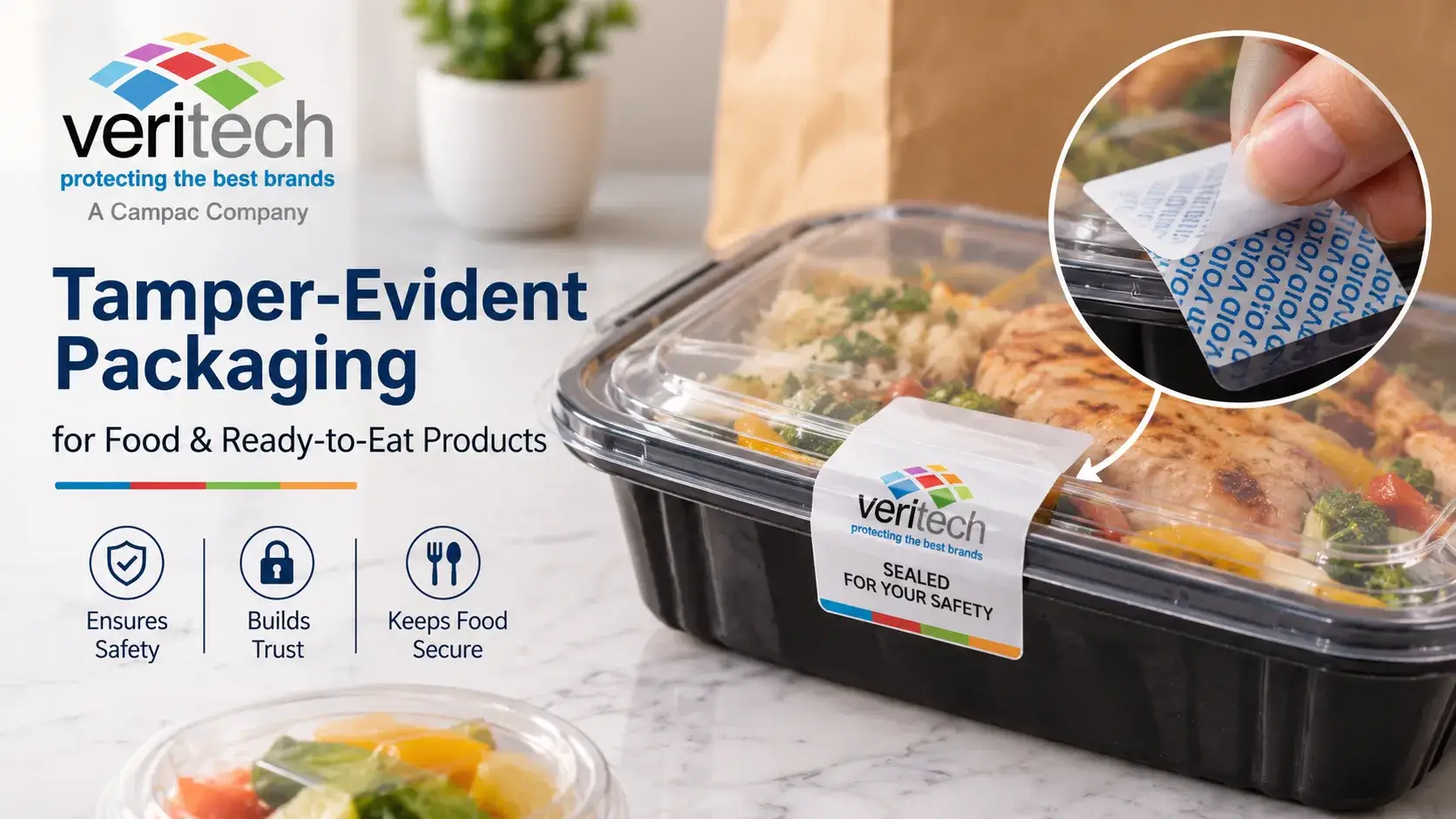
Tamper evident food packaging is any pack design that shows clear, visible proof once it has been opened, so a buyer knows straight away whether the food inside is exactly as it left the factory or kitchen. Common options include induction seals under caps, shrink bands, tear strips, break-away lids and void or destructible seal labels on cartons and delivery bags.
For ready-to-eat (RTE) products, this matters even more. Nobody cooks or washes a packet of poha, a frozen paratha box or a sealed delivery biryani before eating it. If someone has opened it along the way, the buyer is the last line of defence, and all they have to go on is what the pack shows them.
Below, we look at why food packs get tampered with, which formats suit which kinds of packs, the extra demands RTE products bring, and how to pick the right setup without overspending.
Why Food Packs Get Tampered With
Most food tampering isn’t some dramatic plot. It’s everyday stuff. A shopper opens a jar of ghee in the aisle to smell it and puts it back. A stockist refills branded bottles with cheaper oil. Someone in the delivery chain helps themselves to a few fries.
That last one isn’t hypothetical. Back in March 2019, a video of a delivery executive eating from a customer’s order went viral. Zomato responded by rolling out “Safely Sealed” tamper-proof packaging across 10 cities, a strip that can only be opened by cutting it off. One clip was enough to make a whole industry rethink how food reaches the door.
The rules are still catching up. FSSAI’s packaging regulations mainly cover what packaging is made of and whether it’s safe to touch food. For most products, they don’t spell out one specific tamper-evident format, so the choice largely sits with the brand. In December 2024, FSSAI also issued an advisory asking foodtech platforms to train delivery staff in hygiene and keep food and non-food items apart. The direction of travel is pretty clear, and brands that get ahead of it build trust early.
There’s a business reason too. When a customer finds a damaged seal, they don’t blame the distributor or the delivery partner. They blame the brand on the label.
Matching the Format to the Pack
There’s no single best option. The right one depends almost entirely on what your product is packed in. Here’s how the usual formats line up:
- Bottles and jars: an induction seal under the cap, sometimes with a shrink band around the neck.
- Tubs and cups: heat-sealed lidding film under the lid, good for curd, sweets and chutneys.
- Clamshells and takeaway boxes: break-away hinges or tear-off tabs that can’t be clicked shut again.
- Cartons and boxes: void or destructible seal labels across the flap.
- Pouches: a heat seal plus a notch or tear strip, with zip locks that only work after the first tear.
- Delivery bags: single-use seal stickers or tapes that tear when the bag is opened.
Most of these are built into the pack itself. Seal labels are the exception, and they’re often the quickest win, because you can add them to existing cartons and bags without changing your packing line. Good tamper evident seals leave a “VOID” message, break into pieces or show a honeycomb pattern the moment someone tries to lift them, so there’s no quiet way to reseal the pack.
What Makes Ready-to-Eat Trickier
RTE products put packaging through a lot more than a pack of biscuits ever goes through. Seals that work perfectly on a dry shelf can fail in ways nobody spots during testing.
Heat is the first test. Retort pouches for dal makhani or rajma chawal are sterilised at high temperatures after sealing. Any label or seal on them has to survive that, or it’ll peel, bubble or lose its tamper effect before the product even leaves the plant.
Cold is the opposite problem. Frozen and chilled packs pick up condensation the moment they leave the freezer. A lot of standard adhesives simply won’t stick to a wet, icy surface, and a seal that falls off in the van protects nothing. For frozen lines, you need adhesives made for low temperatures and moisture.
Then there’s delivery. Cloud kitchens and quick-commerce brands have to protect food that passes through several hands in under an hour. Here, the seal is as much about reassurance as security. A customer who sees an unbroken sticker on their bag simply feels better about eating what’s inside.
One more thing to keep in mind is food contact. Inks and adhesives on seals shouldn’t touch the food directly, so seals usually sit on the outer pack, the lid or the bag, never inside the tray.
How to Choose for Your Product
It’s easy to overthink this. In our experience, a handful of honest questions narrows it down fast:
- Where does tampering actually happen? On the shelf, in the warehouse or during delivery?
- What will the pack face? Heat, freezing, oil, moisture or rough handling?
- Can your packing line take a new step, or does the seal need to go on by hand?
- Should customers be able to reseal the pack after the first opening?
The answers usually point to one or two formats. A frozen snacks brand worried about shelf tampering might pair a heat-sealed pouch with a freezer-grade seal label on the outer carton. A cloud kitchen mostly needs tamper stickers on bags and boxes that its staff can apply in seconds.
Before you place a big order, run a small trial on real stock. Put packs through your actual supply chain for a week, then check how the seals look at the other end. That one step catches most problems, like adhesives failing in a cold room or labels getting scuffed in transport, while they’re still cheap to fix.
When Tamper Evidence Isn’t Enough
A tamper-evident seal answers one question: has this pack been opened? It doesn’t tell you whether the pack was real to begin with. For brands whose products get copied, like premium ghee, dry fruits, branded spices or baby food, that second question matters just as much.
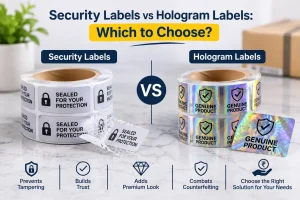
Fakes often come in brand-new packs with perfect-looking seals. Counterfeiters know buyers check for an unbroken seal, so they copy that too. That’s why many food brands now add anti counterfeit packaging features on top of tamper evidence, such as a hologram, a unique QR code a buyer can scan, or security inks that are hard to reproduce.
The nice part is that these don’t need separate labels. A single seal can be tamper-evident and carry a hologram and a scannable code at the same time, so one sticker across the carton flap does both jobs.
At Canpac Veritech, we help food and FMCG brands work out that mix and produce it at scale, from void and destructible seals to holographic labels and coded packs. If you’re launching a new RTE range, moving into quick commerce, or dealing with refills and fakes, our team can look at your packs and suggest where to start.
Frequently Asked Questions
Q1. What is tamper evident food packaging?
A. It’s packaging that shows clear, visible signs once it’s been opened, like a broken seal, a torn strip or a “VOID” mark. That way, buyers can tell whether the food inside has been disturbed.
Q2. Is tamper evident packaging mandatory for food in India?
A. For most foods, FSSAI doesn’t prescribe one specific tamper-evident format. Its packaging rules focus on materials being safe for food contact. Even so, many brands and delivery platforms use tamper-evident seals as standard practice.
Q3. What is the best tamper-evident option for food delivery?
A. Single-use seal stickers or tapes across the bag or box opening work well. They’re quick to apply, cheap, and show clearly if anyone has opened the order on the way.
Q4. Do tamper-evident seals work on frozen food?
A. Yes, as long as you use adhesives made for low temperatures and moisture. Standard labels often fail on frozen packs because of condensation.