What is a 3D hologram? How it works, types and security uses
Published on 09 Apr 2025
3D Hologram
A 3D hologram is an optical image that appears to have depth. When you view it from different angles, parts of the image may shift, reveal another perspective or seem to move.
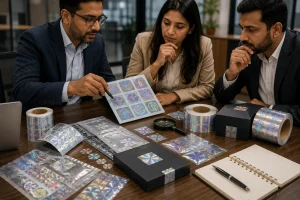
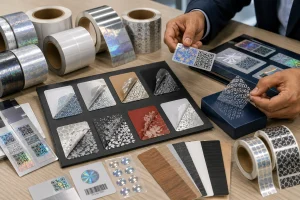
Brands often use 3D holograms on labels, stickers, seals and packaging. The hologram may contain a logo, object, text or layered design. These visual effects help people recognise genuine products and make basic copying more difficult.
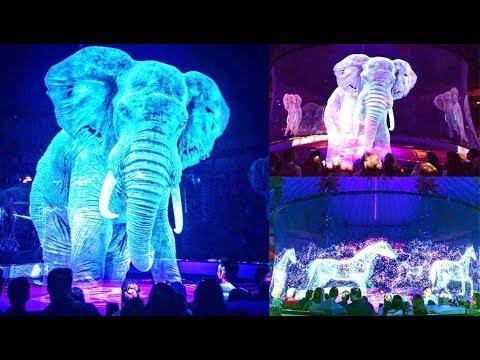
A 3D security hologram is not the same as a projected image, augmented reality or virtual reality. It is a physical optical structure that interacts with light. In most cases, you can view it without a screen, mobile app or headset.
What is a 3D hologram?
3D Hologram
A 3D hologram is an optical image that appears to have depth. When you view it from different angles, parts of the image may shift, reveal another perspective or seem to move.
Brands often use 3D holograms on labels, stickers, seals and packaging. The hologram may contain a logo, object, text or layered design. These visual effects help people recognise genuine products and make basic copying more difficult.
A 3D security hologram is not the same as a projected image, augmented reality or virtual reality. It is a physical optical structure that interacts with light. In most cases, you can view it without a screen, mobile app or headset.
What is a 3D hologram?
A 3D hologram records and reproduces light in a way that makes an image look three-dimensional.
A photograph mainly records the intensity of light and creates a flat image. Holography records more information about the light waves coming from an object. When the hologram is viewed under suitable light, this information creates visible depth and changing perspectives.
The word holography comes from two Greek words:
· Holos, meaning whole
· Graphein, meaning to write or record
In simple terms, holography records a fuller optical view of an object than an ordinary photograph.
A true 3D hologram may show different sides of an object as the viewer moves from left to right. On a security label, this depth can be combined with movement, colour shifts, hidden images and other optical effects.
A hologram works by recording how light behaves after it interacts with an object.
In traditional hologram recording, a coherent light source such as a laser is split into two beams:
1. The object beam falls on the object being recorded.
2. The reference beam travels directly to the recording material.
Light reflected from the object meets the reference beam on a photosensitive surface. Where the two beams meet, they create a microscopic interference pattern.
This pattern does not look like a normal photograph. When suitable light falls on it, the pattern bends, or diffracts, the light and recreates the optical information from the original object.
Each eye receives slightly different information depending on the viewing angle. That difference is what creates the impression of depth and perspective.
How security holograms are produced at scale
Producing a holographic security sticker involves more than printing a colourful or reflective design.
A typical production process may include:
3. Preparing the artwork or three-dimensional design.
4. Creating an optical master through holographic origination.
5. Converting the master into an embossing tool for production.
6. Replicating the microscopic holographic structure onto a suitable film.
7. Adding metallisation, demetallisation, printing or security coatings.
8. Converting the film into labels, stickers, foils or seals.
9. Adding the required adhesive and release liner.
The visual effect comes from microscopic structures that control the way light bends. Standard colour printing alone cannot create the same effect.
Because the process needs specialised equipment and controlled masters, a customised hologram is harder to copy accurately than an ordinary printed label.
Is every shiny sticker a 3D hologram?
No. Some stickers use reflective, metallic or rainbow-effect films without containing a true three-dimensional holographic image.
Products commonly described as holographic include:
· Decorative holographic films
· Generic rainbow-pattern stickers
· Two-dimensional holograms
· 2D/3D layered holograms
· Kinetic or movement-based holograms
· Dot-matrix holograms
· True 3D holograms
· Nano-optical security features
A 2D/3D hologram usually places flat artwork on different visual layers. It creates a sense of depth, but it may not show the full perspective of a three-dimensional object.
A true 3D hologram reproduces a realistic object or digital 3D model. The viewer can see depth, perspective and parallax as the viewing angle changes.
The right format depends on the security risk, design requirement, label size, verification method and budget.
Explore Veritech’s range of hologram solutions to compare the available formats.
What are true 3D holograms?
A true 3D hologram creates a realistic optical version of a physical object or a digitally developed 3D model.
Unlike a simple layered design, it can show:
· Realistic depth
· Several viewing angles
· Natural changes in perspective
· Clear separation between foreground and background
· Object rotation or parallax
· Fine three-dimensional details
The image may appear to sit above the surface, below it or within the holographic layer.
Brands may choose a true 3D hologram when they need a distinctive visual security feature. The design can use a product, logo, emblem, symbol, component or another customised 3D object.
Veritech’s true 3D holograms can be developed for product authentication, secure packaging and brand differentiation.
What is the difference between 2D/3D and true 3D holograms?
Feature
2D/3D hologram
True 3D hologram
Image construction
Flat artwork placed on several visual layers
A physical object or digitally created 3D model
Depth effect
Layered or stepped depth
More realistic depth and perspective
Viewing experience
Elements appear on different planes
Different sides or perspectives may become visible
Design source
Logos, text and graphic artwork
A physical object or digital 3D model
Typical use
Brand labels, security stickers and promotional packaging
Premium authentication and higher-security applications
Production complexity
Moderate to advanced
Advanced and highly specialised
Both formats can support product security. The choice should depend on the threat level and the way people will verify the label, not only on how attractive it looks.
Types of holograms
Holograms can also be grouped according to how they are recorded and viewed.
Reflection holograms
A reflection hologram is viewed using light reflected from its surface.
It can produce a bright image and may be visible under a suitable white-light source. Reflection holograms are often used for displays, security features and authentication.
Transmission holograms
A transmission hologram is viewed using light that passes through the holographic recording.
Traditional transmission holograms often need a laser or another controlled light source for a clear image. The viewer usually sees the reconstructed image from the side opposite the light source.
Hybrid holograms
A hybrid hologram combines two or more optical or production techniques.
A hybrid security hologram may include:
· 2D/3D layers
· True 3D elements
· Dot-matrix effects
· Kinetic movement
· Microtext
· Hidden images
· Demetallised patterns
· Colour changes
· Variable data
· QR codes or barcodes
In commercial security labels, the word “hybrid” usually means that the label combines several optical, printed or digital security features rather than relying on one effect.
What security features can be added to a 3D hologram?
A 3D holographic label can include visible, hidden, tamper-evident and digital features.
Overt features
Overt features are designed for quick visual checking and do not require special equipment.
Examples include:
· Three-dimensional images
· Movement effects
· Colour changes
· Flip images
· Brand logos
· Kinetic lines
· Multi-channel images
· Visible microtext
These features help buyers, distributors and retailers carry out a first-level authenticity check.
Covert features
Covert features are intended for trained or authorised users.
They may include:
· Hidden images
· Microtext
· Nano text
· Laser-readable information
· Special optical elements
· Concealed codes
· Machine-readable features
These features give the brand another verification layer that is not immediately visible to an ordinary buyer.
Tamper-evident features
A holographic label can also be made to show clear signs of removal or interference.
Depending on the material and adhesive, an attempt to remove the label may:
· Break it into small pieces
· Leave a VOID message
· Reveal a honeycomb pattern
· Separate the holographic layer
· Leave residue on the surface
· Make the label impossible to reuse
A hologram is not automatically tamper-evident. Its tamper behaviour depends on the film, adhesive, release construction and the surface where it is applied.
Digital features
A hologram can also carry:
· QR codes
· Barcodes
· Serial numbers
· Unique identification codes
· Batch information
· Track-and-trace codes
· Product authentication links
A unique digital identity allows a user to check whether the product record is valid and whether the same code has already been scanned.
Counterfeiters often start by copying the visible parts of a package, including colours, logos, text and ordinary labels.
A customised 3D hologram adds an optical feature that cannot be reproduced accurately with an office printer or a standard printing process. Copying it requires specialist origination, master creation and replication equipment.
The main benefits include the following.
Optical effects that are difficult to copy
Depth, parallax, movement and hidden images are harder to imitate accurately than flat printed artwork.
Quick visual checks
Buyers, retailers and distributors can inspect a familiar holographic feature without using a dedicated electronic reader.
Visible signs of tampering
When the correct tamper-evident construction is used, the hologram can show whether someone tried to open, remove or transfer the label.
Brand-specific design
The hologram can include the brand logo, product mark or another recognisable visual element, so it becomes part of the packaging rather than a generic sticker.
Connection with digital authentication
QR codes, serial numbers and unique identifiers can connect the physical label to an online verification system.
Support for layered security
A 3D hologram can work with security printing, hidden features, tamper evidence and digital traceability.
No single security feature can stop every counterfeit. A hologram works best as one part of a wider anti-counterfeiting programme.
Where are 3D hologram stickers used?
3D holographic labels are useful in industries where product authenticity, package integrity and visual identification matter.
Pharmaceuticals and healthcare
Common applications include:
· Medicine cartons
· Bottles and containers
· Medical devices
· Diagnostic products
· Official healthcare documents
Automotive components
Holograms can be applied to:
· Spare parts
· Lubricants
· Filters
· Batteries
· Warranty seals
· Component packaging
FMCG products
Food, beverage, household and personal-care brands may use holographic stickers for product authentication and packaging differentiation.
Electronics and appliances
Holograms can protect electronic components, accessories, chargers, devices and warranty points.
Beauty and personal care
Fragrances, cosmetics, skincare and salon products can use holograms to help buyers distinguish authorised products from imitations.
Certificates and documents
Holograms may be used on:
· Certificates
· Licences
· Identification cards
· Academic documents
· Event passes
· Membership cards
Industrial products
Chemicals, tools, agrochemicals, building materials and engineered components may use holographic labels for identification and authentication.
3D hologram vs AR vs VR
A 3D security hologram, augmented reality and virtual reality use different technologies and serve different purposes.
Technology
How it works
Equipment needed
Common applications
3D security hologram
A physical optical structure creates depth and changing visual effects
Usually visible under suitable light without a screen
Security labels, packaging, documents and product authentication
Holographic display or projection effect
Uses screens, transparent films, rotating displays or projection systems
Display or projection equipment
Events, exhibitions and advertising
Augmented reality
Adds digital content to a view of the physical world
Smartphone, tablet or AR glasses
Product demonstrations, games, navigation and training
Virtual reality
Replaces the physical view with a computer-generated environment
VR headset and controllers
Gaming, simulation, education and training
A security hologram on packaging does not normally project a floating image into open space. Its microscopic optical structure controls light to create the impression of depth.
Understanding this difference helps businesses avoid confusing security labels with entertainment and display technologies.
What should a business consider before ordering 3D holograms?
Before choosing a hologram, the business should first define the security problem it needs to solve.
Define the threat
Identify the main concern:
· Counterfeit products
· Label duplication
· Unauthorised refilling
· Package tampering
· Product diversion
· Warranty fraud
· Document alteration
Select the authentication level
Decide who will check the label and what type of feature they need:
· Overt features for buyers and channel partners
· Covert features for authorised teams
· Forensic features for specialist examination
· Digital authentication for scan-based verification
Check the application surface
Glass, plastic, paperboard, metal and textured materials need different adhesives and label constructions.
Consider the operating environment
The label may need to withstand:
· Heat
· Refrigeration
· Moisture
· Chemicals
· Abrasion
· Outdoor exposure
· Long storage periods
Decide how the label will be applied
The packaging line may require:
· Sheet-form labels
· Reel-form labels
· Manual application
· Automatic application
· High-speed dispensing
· Hot-stamping foil
Define the verification process
A security feature is useful only when users understand:
· What they need to check
· Where the label should appear
· How the optical effect should behave
· Whether they need to scan a code
· What action to take when authentication fails
3D hologram manufacturer in India
When comparing hologram manufacturers in India, businesses should look beyond the shine and appearance of a sample.
A capable 3D hologram manufacturer should support:
· Custom holographic origination
· Secure master creation
· Controlled production
· True 3D and layered hologram formats
· Registered printing
· Tamper-evident materials
· Serialisation and variable data
· QR code or barcode integration
· Consistent quality across production batches
· Compatibility with the packaging line
· Secure handling of brand artwork and masters
Registered printing is useful when text, graphics or codes must line up accurately with specific holographic elements. Learn more about registered printed holograms.
Customised 3D holograms from Veritech
Veritech develops customised 3D holograms, holographic labels and security stickers for product authentication, packaging security and brand protection.
Depending on the application, the label can include:
· True 3D images
· Layered 2D/3D artwork
· Brand logos
· Kinetic effects
· Hidden images
· Microtext
· Demetallisation
· Tamper-evident construction
· Serial numbers
· Barcodes
· QR codes
· Digital product authentication
The right format depends on the product, packaging surface, security risk, application method and verification process.
A useful 3D hologram should do more than look attractive. It should be difficult to reproduce, easy for authorised users to recognise and suitable for the conditions in which the product is manufactured, stored and distributed.
Frequently asked questions
What is a 3D hologram in simple words?
A 3D hologram is an optical image that appears to have depth. As the viewing angle changes, different parts of the image become visible, creating the impression of a three-dimensional object.
How do 3D hologram stickers work?
The sticker contains microscopic optical structures that bend light. These structures create visible depth, movement, colour changes or different images when the sticker is viewed from different angles.
Does a 3D hologram need electricity?
A holographic security sticker normally does not need electricity. It can be viewed under a suitable light source.
Holographic displays and projection systems are different technologies and may need electronic equipment.
Is a 3D hologram the same as augmented reality?
No. A 3D security hologram is a physical optical feature. Augmented reality displays digital content through a smartphone, tablet or AR device.
Can 3D hologram stickers prevent counterfeiting?
They can make copying more difficult and support visual authentication. However, no single feature can stop every form of counterfeiting.
Products with a higher risk should combine holograms with tamper evidence, unique codes, digital authentication and supply-chain controls.
What is the difference between a 2D/3D and a true 3D hologram?
A 2D/3D hologram places flat artwork at different visual depths. A true 3D hologram reproduces a three-dimensional object or model with more realistic depth, perspective and parallax.
Can a QR code be printed on a 3D hologram?
Yes. A static or unique QR code can be added to a holographic label.
A unique code is more useful for item-level authentication, duplicate-scan detection, warranty registration and track-and-trace applications.
Are all 3D holograms tamper-evident?
No. Tamper evidence depends on the label material, adhesive and release construction.
Choose a destructible, VOID, honeycomb or another specialised format when attempted removal must leave a visible sign.
Where are 3D holograms commonly used?
They are used on product packaging, automotive parts, pharmaceuticals, electronics, cosmetics, certificates, licences, identity documents and other products that need authentication or visual security.