Track and trace for product authentication and supply chain visibility
Published on 26 Apr 2025
Track and trace records the identity, movement and status of products as they move through manufacturing, warehousing, distribution and retail. It creates a digital history that shows where a product has been, who handled it and which supply chain steps were completed.
Most track and trace solutions give every product, case or pallet a unique identifier. This may appear as a QR code, barcode, serial number, RFID tag or another machine-readable format.
Every scan adds a new record. Manufacturers can use these records to follow product movement, verify authenticity and investigate unusual activity. The same information can also help distributors, retailers and end users check relevant product details.
Track and trace records the identity, movement and status of products as they move through manufacturing, warehousing, distribution and retail. It creates a digital history that shows where a product has been, who handled it and which supply chain steps were completed.
Most track and trace solutions give every product, case or pallet a unique identifier. This may appear as a QR code, barcode, serial number, RFID tag or another machine-readable format.
Every scan adds a new record. Manufacturers can use these records to follow product movement, verify authenticity and investigate unusual activity. The same information can also help distributors, retailers and end users check relevant product details.
When track and trace works with secure labels, holograms and digital authentication, it creates a layered system for supply chain visibility and brand protection.
How it Works
What is track and trace?
Track and trace combines two related functions:
· Tracking shows the current or most recently recorded location and status of a product or shipment.
· Tracing shows its earlier movements, transactions and handling events.
Together, they create a digital trail from production to the final point of sale or use.
A product record may include:
· Unique product identification number
· Batch or lot number
· Manufacturing date
· Expiry date
· Packaging information
· Dispatch and delivery records
· Warehouse movements
· Distributor details
· Authentication scans
· Returns or warranty information
Track and trace does not always mean that every product is monitored continuously through GPS. In most cases, product movement is recorded when the code is scanned. GPS may be used separately to monitor the vehicle carrying the shipment.
This difference matters when planning a traceability programme. The chosen technology should match the level of visibility the business actually needs.
Why is supply chain traceability important?
Materials, components and finished goods often move through several locations before they reach the buyer. A product may pass through a factory, warehouse, logistics provider, distributor, dealer and retailer.
Without a consistent way to identify and validate products, teams may struggle to confirm:
· Where a product came from
· Whether it followed the approved distribution route
· When it changed hands
· Whether it was replaced or diverted
· Whether it is genuine
· Where a delay or mismatch occurred
Manual records can provide basic information, but they often become scattered when each supply chain partner uses a different system.
A digital track and trace solution connects the product identity with each recorded event. This gives authorised teams a clearer and more consistent view of the product journey.
How does a track and trace system work?
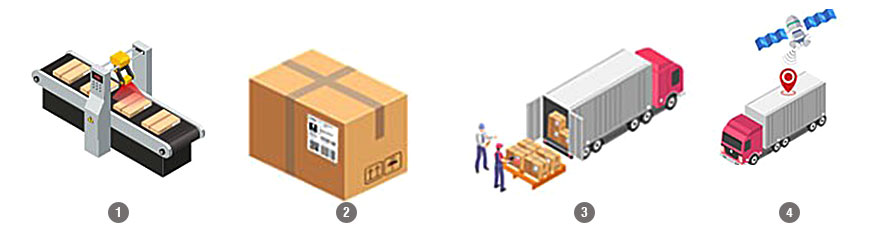
A typical track and trace process has six stages.
1. Generate a unique product identity
The system assigns a unique identification number to a product, package, case or pallet.
The identifier may be stored in:
· A QR code
· A barcode
· A data matrix code
· An RFID tag
· A serialized label
· An alphanumeric code
The code connects to a digital record containing the required manufacturing and packaging details.
2. Apply the code to the product or packaging
The code is printed on a label or directly on the packaging.
Based on the security requirement, it may be combined with:
· A holographic label
· A tamper-evident seal
· A security barcode label
· A destructible label
· A secure printed feature
A holographic or tamper-evident layer helps protect the physical pack. The unique code gives the product a digital identity.
3. Connect different packaging levels
Products are often packed into cases, cartons and pallets.
Aggregation digitally links these packaging levels. For example, the system can record which products are inside a carton and which cartons are loaded onto a pallet.
This means a warehouse or distributor can scan the larger unit instead of scanning every individual product.
4. Record supply chain events
The code can be scanned at important stages such as:
· Production
· Quality inspection
· Packing
· Warehouse entry
· Order picking
· Dispatch
· Vehicle loading
· Distributor receipt
· Retail delivery
· Product return
Each scan updates the digital history of the product or shipment.
5. Monitor shipment movement
Shipment records can be linked to a vehicle, transport document or logistics partner.
With GPS integration, teams can monitor the vehicle during transit. RFID may also help identify shipments automatically at selected checkpoints.
GPS usually tracks the vehicle, not every product inside it. Product-level traceability still depends on the serialized code and the scan events recorded throughout the journey.
6. Authenticate the product
A distributor, retailer, field representative or end user can scan the code to check it against the authentication system.
The result may confirm:
· Whether the code is valid
· Whether the product record exists
· Whether the code has already been scanned
· Whether the scan took place in an expected region
· Whether the product followed an approved route
· Whether the product is still within its validity period
A QR code can carry the unique identification number assigned to a product.
When someone scans it, the code opens the related digital product record. This makes QR code product authentication easy to access through compatible smartphones and scanning devices.
A unique QR code can support:
· Product verification
· Batch identification
· Supply chain event recording
· Warranty registration
· Loyalty programme enrolment
· Consumer engagement
· Duplicate-scan detection
· Product recall communication
A static QR code is the same on many products, so it offers limited value for item-level traceability.
For stronger authentication, each product should receive its own securely generated code. The system should also protect codes against copying, predictable number generation and unauthorised database changes.
How do holograms strengthen track and trace?
A QR code or barcode gives a product a digital identity, but someone may copy the visible code and print it on unauthorised packaging.
A customised hologram adds an optical feature that ordinary printing cannot reproduce easily. A destructible or residue-releasing hologram can also show when someone has tried to remove or transfer the label.
Using a hologram with a unique code gives users two ways to check the product:
1. Physical authentication: The user checks the holographic and tamper-evident features.
2. Digital authentication: The user scans the unique code and checks the product record.
The physical feature helps users recognise the expected label, while the digital system confirms whether the product identity is valid.
Distributors connect manufacturers with dealers and retailers. They need a dependable way to validate the products they receive and record where those products go next.
A track and trace system can help distributors:
· Confirm that received products belong to an approved shipment
· Verify product and batch details
· Record receipt and dispatch events
· Identify missing cartons or units
· Check product authenticity
· Handle complaints more efficiently
· Provide evidence during shortage or delivery disputes
Because each product history is linked to a unique code, authorised teams can check the exact item instead of relying only on invoices or written descriptions.
This can make complaint handling easier when a product is damaged, missing, suspected to be counterfeit or supplied through an unauthorised route.
How does track and trace help end users?
End users may receive access to a limited verification page or mobile application.
After scanning the code, they may be able to see:
· Product name
· Manufacturer information
· Authentication status
· Batch details
· Manufacturing or expiry information
· Warranty registration
· Usage or safety instructions
The result should be clear and easy to understand.
A message that only says “scan successful” does not tell the user whether the product is genuine. The interface should clearly state whether the code is valid, invalid, previously scanned or needs further review.
Sensitive supply chain information should remain available only to authorised users. Consumers usually need product verification details, not the complete logistics record.
Advantages of a track and trace solution
Improved supply chain visibility
Every scan adds to the product’s digital history. Authorised users can see where it has moved and which supply chain events have been completed.
Stronger product authentication
The system checks unique codes against a controlled database to confirm whether the product identity is valid.
Lower risk of diversion
Unexpected movement, scans from unauthorised locations and repeated scans can be flagged for investigation.
Better inventory control
Serialized product data can improve the accuracy of stock movement and inventory records.
Faster exception management
Teams can quickly check where a shipment was last recorded and which partner handled it.
Support for recalls and returns
Product-level identification helps separate affected items from inventory that is safe to sell or use.
Clearer complaint resolution
The digital history gives teams more specific evidence when reviewing delivery, authenticity, warranty or product quality complaints.
Useful business analytics
Combined data can show:
· Distribution patterns
· Scan frequency
· Regional demand
· Delivery delays
· Channel movement
· Suspicious authentication activity
· Inventory bottlenecks
Track and trace technologies explained
Technology
Main purpose
What to consider
QR code
Connects a product to its digital identity
A unique code is more useful than one static code shared across many products
Barcode
Supports product and logistics identification
The business needs compatible scanners and suitable data standards
Serialized label
Gives each item or package a unique number
Code generation and database access must be secured
Hologram
Provides visible optical authentication
The design should be customised and supported by a clear verification process
Tamper-evident label
Shows attempted removal or package opening
Performance depends on the surface, adhesive and operating environment
RFID
Supports contactless identification
Cost and infrastructure needs vary by application
GPS
Tracks a vehicle or connected device
It does not automatically track every product carried inside the vehicle
Cloud platform
Stores and processes traceability events
Access control, availability and software integration need careful planning
What should manufacturers check before implementation?
A track and trace programme should start with a clear business problem, not with a technology choice.
Define the required traceability level
Decide whether the business needs identification at the level of:
· Batch
· Individual product
· Inner package
· Carton
· Pallet
· Shipment
Item-level traceability gives more detail, but it also creates more codes, scans and data to manage.
Map the real supply chain
List every location where the product is manufactured, packed, stored, transferred, delivered or returned.
The system should follow the actual movement of goods, including exceptions and manual steps, rather than an ideal version of the process.
Select the right identifier
Choose QR codes, barcodes, data matrix codes, RFID or a suitable combination based on:
· Product size
· Packaging surface
· Scan environment
· Production speed
· Security risk
· Cost
· Partner infrastructure
Define user access
Manufacturers, warehouses, distributors, retailers and consumers do not need the same information.
Role-based access helps keep sensitive business and supply chain data protected.
Plan integration with existing systems
The solution may need to connect with:
· ERP
· Warehouse management system
· Inventory management system
· Manufacturing execution system
· CRM
· Warranty management platform
· Distributor management system
Integration reduces repeated data entry and makes traceability records more useful in day-to-day operations.
Set rules for exceptions
The system should define the next action when:
· A code is scanned several times
· A product appears in an unexpected location
· A carton contains the wrong item
· A shipment is delayed
· A code is invalid
· A label shows signs of tampering
Collecting data is not enough. Teams also need a clear process for investigating alerts and taking action.
Veritech Plus Track and Trace solution
Veritech Plus Track and Trace connects serialized product identification with supply chain event monitoring and product authentication.
Depending on the requirement, the solution can use a unique QR code-based identifier on a label or packaging surface. The code may also be combined with a holographic or tamper-evident feature for both physical and digital verification.
The cloud-based system can provide access through configured web, desktop and mobile interfaces. Each authorised stakeholder can view the information needed for their role.
Possible capabilities include:
· Unique product identification
· QR code or barcode-based scanning
· Product authentication
· Packaging-level aggregation
· Supply chain event recording
· Distributor verification
· Consumer authentication
· Vehicle or shipment integration
· Exception alerts
· Analytics and reporting
· ERP, MIS or inventory-system integration
The final workflow should match the product, packaging hierarchy, manufacturing line, distribution model and security risk.
What is the difference between tracking and tracing?
Tracking shows the current or most recently recorded status of a product or shipment. Tracing shows its earlier movements, transactions and handling events.
Together, they create a digital history of the product’s supply chain journey.
Does track and trace provide real-time location information?
It can provide near real-time information when scan events are recorded and synchronised quickly.
Continuous GPS information usually applies to a vehicle or connected tracking device. Product-level information is generally updated through scans at defined checkpoints.
How does track and trace help prevent counterfeiting?
Track and trace cannot physically stop every counterfeit product from being made. It helps teams detect suspicious products by assigning unique identities, recording approved movements and checking codes against a controlled database.
It becomes more effective when used with secure labels, holograms, tamper evidence and channel monitoring.
Can a QR code be copied?
Yes. Someone can copy the visible image of a QR code. The real security comes from the unique identifier, database rules, secure code generation, scan monitoring and physical protection around the code.
Duplicate-scan detection and secure holographic labels can help identify copied codes.
What is product serialization?
Product serialization means assigning a unique identification number to each saleable unit or selected packaging level.
A batch number is shared by several products. A serialized code identifies one item separately from another.
Can track and trace integrate with existing software?
A properly configured solution can connect with ERP, warehouse, inventory, CRM, warranty and distributor management systems.
The integration method depends on the existing software, available APIs, required data and security controls.
Is track and trace only suitable for pharmaceutical products?
No. It can be used in pharmaceuticals, FMCG, automotive components, electronics, agrochemicals, beauty products, industrial goods and other sectors where product identity and distribution visibility matter.
Is a hologram necessary for track and trace?
No. A track and trace system can work with QR codes, barcodes, RFID or other identifiers.
A hologram adds a physical authentication layer and can make unauthorised label copying or transfer more difficult