Introduction
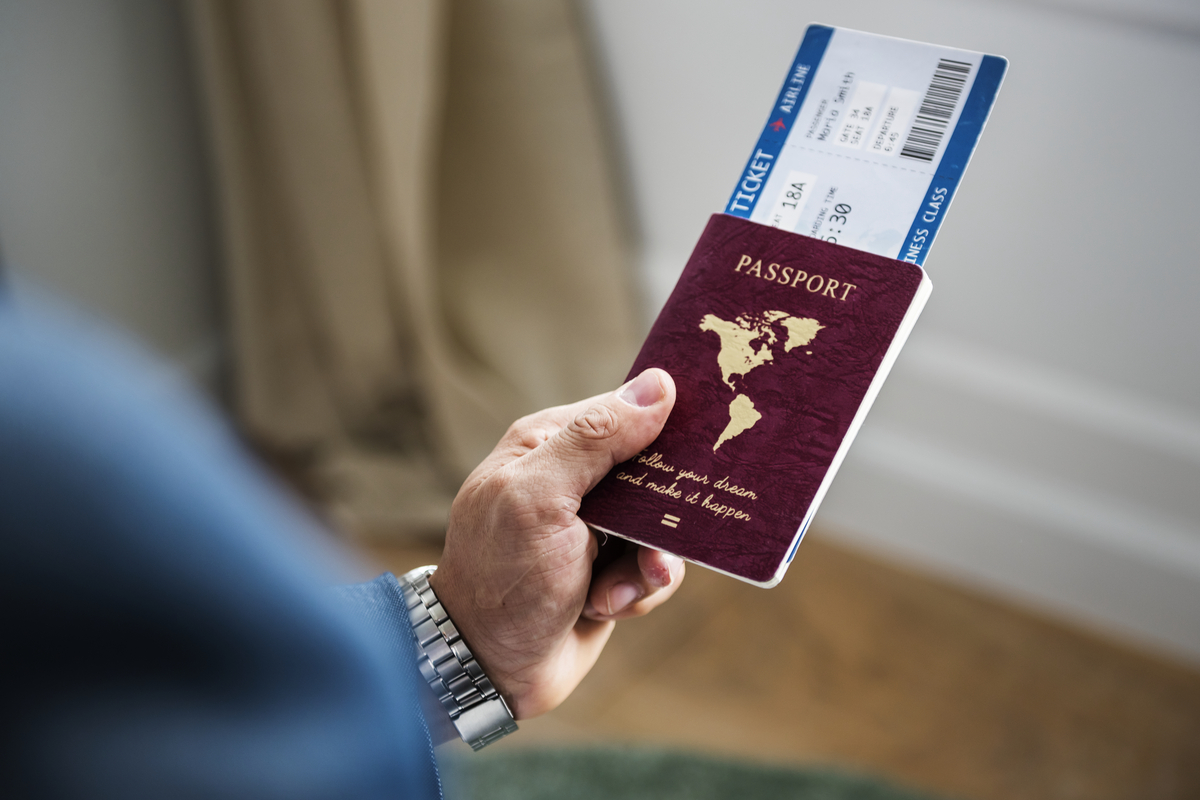
A strong Know Your Customer (KYC) procedure should include validating ID documents and detecting counterfeit identity documents. Due to the inventive ways that fraudsters, identity thieves, and money launderers exploit even the most essential instruments to spoof identities and produce phony identity documents, authenticating and validating government-issued identity proof is getting increasingly complicated and expensive. Chips holding biographical data, invisible ink, and optically variable ink are examples of passport security measures. Since identity experts and verification services are careful to ensure these are present while validating identities.
Exposing Passport Forgery: Unravelling Fraud Techniques and Implementing Safeguarding Measures
Introduction
A strong Know Your Customer (KYC) procedure should include validating ID documents and detecting counterfeit identity documents. Due to the inventive ways that fraudsters, identity thieves, and money launderers exploit even the most essential instruments to spoof identities and produce phony identity documents, authenticating and validating government-issued identity proof is getting increasingly complicated and expensive. Chips holding biographical data, invisible ink, and optically variable ink are examples of passport security measures. Since identity experts and verification services are careful to ensure these are present while validating identities.
Exposing Passport Forgery: Unravelling Fraud Techniques and Implementing Safeguarding Measures
1. Counterfeiting
Counterfeiting involves the complete replication of a document through various means. These methods include:
- Using alternative materials to imitate the original document, such as substituting paper or polycarbonate.
- Scanning a genuine document and modifying it using computer software.
- Reproducing background designs and logos using alternative printing technologies.
- Applying commercial laminates for final lamination.
- Creating the document anew using computer software.
- Utilizing original materials that may be commercially accessible.
To prevent the production of counterfeit passports, it is crucial to design documents that are extremely difficult to replicate, produce, and personalize. Fortunately, this can be achieved through a combination of strategies. These include incorporating both tactile and optical features, utilizing diverse technologies, and employing materials and inks that are not publicly available. Implementing an intricate design with multiple security measures can significantly reduce the risk of counterfeit passport production.
2. Alteration
Fraudsters who attempt to alter legitimate documents usually do the following:
- Photo editing or replacement
- Alteration made to the biographical information in the machine-readable zone (MRZ)
- Deletion of visa/observations page entries
- Erasure of biographical data by mechanical and chemical means
- Destabilizing assaults
- Modification of the data on the data page used for personalization. For instance, we are adding more marking to the current personalized data or changing it with a thin foil overlay.
So how do we deal with this?
To ensure the originality of your content, I can provide a revised version of the information you provided while maintaining the core meaning. Here’s a modified version of the points you mentioned:
- Embed personal data within the document structure rather than just on the surface. This makes it challenging for fraudsters to access, modify, or replicate it.
- Integrate personal data with security features. Any attempt to alter a forged passport will result in noticeable and evident signs of tampering.
- Implement techniques that involve duplicating personal data. Employing various duplication methods significantly complicates the task for potential fraudsters.
3. Recycling
Recycling includes fabricating false documents and appropriating text from authentic documents, including erasing and replacing entire pages or visas.
How are the thieves going to make this phony passport?
- Removal of security features from genuine documents to be reused in falsified passports.
- Incorporation of “recycled” genuine passport security features into newly forged passports.
- Interchanging pages between different passports.
To counteract these fraudulent activities, it is crucial to interlock and integrate all elements within the passport design closely. A comprehensive approach to passport security is necessary.
For Example, in the image provided, the hinge that connects the passport booklet to the data page is designed to be extremely difficult to remove without causing damage to both parts. Integrating UV-sensitive ink lines requires precise alignment if another data page is inserted.
Implementing such measures can significantly reduce the risk of tampering and counterfeiting.”
Remember to cite the sources of information to avoid plagiarism properly. Feel free to ask if you have any further questions or need assistance with any other topic.
4. Stealing
This represents the theft of an actual, authentic blank document.
- It could occur during transportation or storage or at any moment throughout the passport’s life cycle, from creation to customization. In this situation, fake passports can be difficult to spot since they look authentic.
- The integrity of blank document production, shipping, storage, and accounting is essential to the security chain.
- Fraudsters must attempt to master them all since personalization uses various modern technology.
- We advise numbering all travel papers after production to guarantee accurate tracking.
- Also important is reporting. Data on 250,000 stolen or lost Syrian and Iraqi passports, including blank ones, is shared by Interpol.
Protecting Authenticity through Secure Labeling
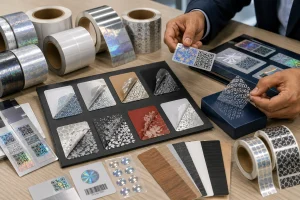
Secure labeling is vital in establishing the authenticity of passports and government IDs. Various security features, such as holograms, optically variable inks, and special foils, are applied to these documents. These features create visible and verifiable elements that are challenging to replicate accurately.
Visual Features:Secure labels often incorporate intricate designs, patterns, or symbols that are visually appealing and difficult to reproduce. This enables authorities to identify counterfeit documents swiftly, preventing their circulation.
Covert Features: Secure labeling also includes covert elements that are not immediately visible to the naked eye.
These features may involve UV-responsive inks, micro-printing, and hidden security threads. Integrating covert elements adds a layer of security, as specialized tools or equipment are required to detect them. This complexity is a deterrent to counterfeiters, making the replication process more arduous and time-consuming. By implementing secure labeling techniques, passport and ID issuers enhance the protection of document authenticity, reducing the risk of counterfeiting.
Tamper Evidence and Document Integrity:
Tamper evidence is crucial to secure labeling for passports and government IDs. These documents are susceptible to tampering, including photo substitution, document alteration, and data manipulation. Secure labels are designed to provide clear and visible evidence of tampering attempts. For instance, tamper-evident films or seals can be applied to the document’s edges or photo page. If someone tries to remove or alter the label, it leaves behind a trace or void mark, signaling potential tampering. This allows document inspectors to identify fraudulent or unauthorized modifications swiftly.
Digital Security Features and Biometrics:
Secure labeling includes not only physical security measures but also incorporates digital or electronic security features. Integrating biometric data, such as fingerprints or facial recognition, adds a layer of security to passport and government ID systems. These biometric features are securely stored and encoded within the document’s chip or barcode. By comparing the live biometric data of the document holder with the stored information, authorities can authenticate the document’s legitimacy and verify the holder’s identity.
Facilitating Document Verification:
Secure labeling facilitates document verification at various checkpoints, including border control agencies and law enforcement. These entities rely on efficient and accurate proof of passports and government IDs to ensure the safety and security of individuals and nations. The combination of visual and covert elements in secure labeling allows officials to conduct visual inspections and utilize specialized tools or devices to authenticate the document’s legitimacy. This significantly reduces the risk of unauthorized entry, identity fraud, and other illicit activities.
Enhancing Trust and Credibility:
Moreover, secure labeling enhances the trust and credibility of passport and government ID systems. By incorporating robust security features, governments and issuing authorities are committed to protecting personal data and preventing identity-related crimes. This, in turn, instills confidence among citizens, residents, and international travelers in the integrity of the document issuance and verification processes.